Pet-Friendly Home Design: Smart Solutions for US Households
Pet-friendly home design seamlessly blends aesthetic appeal with practical considerations, ensuring comfort and safety for both human residents and their beloved animal companions within US households.
Creating a home that caters to both human and animal inhabitants can transform daily living. In US households, the concept of pet-friendly home design is gaining significant traction, moving beyond simple accommodations to truly integrated solutions that enhance comfort and style for everyone. This article delves into smart strategies to achieve a harmonious living space where pets are not just tolerated, but truly thrive alongside their human families.
Choosing Durable and Easy-to-Clean Materials
One of the foundational pillars of effective pet-friendly home design is the selection of materials that can withstand the rigors of animal companionship while remaining aesthetically pleasing. From playful paws to shedding fur, pets introduce unique challenges to maintaining a pristine home. Opting for the right surfaces can significantly reduce cleaning time and extend the lifespan of your interiors.
When considering flooring, carpets, while soft, can trap dander, fur, and odors, making them a less-than-ideal choice for many pet owners. Hard surfaces, such as tile, laminate, or engineered wood, offer superior durability and are much easier to clean. These materials resist scratches, spills, and accidents, providing a hygienic and long-lasting solution.
Flooring for furry friends
Selecting the right flooring is crucial for a pet-friendly home. It needs to be resilient against claws, spills, and general wear and tear, while also being comfortable for both pets and people.
- Luxury Vinyl Plank (LVP): Highly durable, waterproof, and scratch-resistant, LVP mimics the look of wood or stone and is comfortable underfoot.
- Tile: Ceramic or porcelain tiles are incredibly tough, waterproof, and easy to clean. Grout lines can be sealed for extra protection against stains.
- Engineered Hardwood: While real hardwood can scratch, engineered options with harder finishes or distressed looks can be more forgiving.
- Laminate: A cost-effective option that offers good scratch and stain resistance, though it might be less water-resistant than LVP or tile.
For furniture, fabrics play a critical role. Microfiber, leather, and outdoor fabrics are excellent choices due to their resistance to stains, odors, and pet hair. Leather, in particular, can develop a beautiful patina over time, and scratches often blend in, adding character rather than damage. Washable slipcovers are another practical solution, allowing for easy removal and cleaning.
Ultimately, investing in durable and easy-to-clean materials upfront can save homeowners considerable time, effort, and money in the long run. It ensures that your home remains a comfortable and stylish sanctuary, even with the energetic presence of pets.
Creating Dedicated Pet Zones and Spaces
Integrating pets into your home doesn’t mean sacrificing your aesthetic or personal space. Instead, it involves thoughtfully designing dedicated areas that cater to their specific needs, providing them with comfort and security while maintaining the overall organization and style of your home. These zones can range from sleeping nooks to feeding stations and play areas.
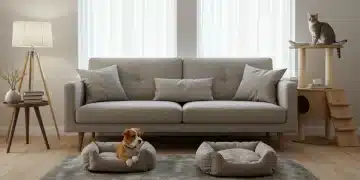
A designated sleeping area, whether it’s a cozy bed in a quiet corner or a built-in crate, gives your pet a sense of ownership and a safe retreat. These spaces can be seamlessly incorporated into existing decor, perhaps with a stylish pet bed that complements your color scheme, or a custom-built unit under a window seat.
Smart feeding and watering stations
Feeding areas can often be messy, but with smart design, they can be both functional and discreet. Integrating feeding stations into cabinetry or creating dedicated nooks helps contain spills and keeps bowls out of the way.
- Built-in drawers: Pull-out drawers can house food and water bowls, keeping them hidden when not in use.
- Raised feeders: Beneficial for larger or older pets, raised feeders can be integrated into kitchen islands or custom furniture.
- Splash mats: Use easy-to-clean silicone or waterproof mats underneath bowls to catch spills and contain messes.
Beyond basic necessities, consider areas for play and exercise. For cats, vertical spaces like wall-mounted shelves or cat trees provide climbing opportunities and vantage points. Dogs benefit from access to secure outdoor spaces or designated indoor play zones with durable toys and ample room to move. These thoughtful additions prevent pets from taking over human spaces and encourage appropriate behavior.
By consciously designing specific zones for your pets, you not only enhance their well-being but also contribute to a more organized and harmonious living environment for everyone in the household. It’s about finding a balance between shared spaces and individual needs.
Integrating Pet-Friendly Furniture and Accessories
When furnishing a home with pets, the goal is to select pieces that are not only comfortable and stylish but also durable and easy to maintain. Pet-friendly furniture and accessories are designed to withstand the wear and tear associated with animals, from playful scratching to accidental spills, ensuring longevity and sustained aesthetic appeal. This approach extends beyond just sofas and chairs to include storage solutions and decorative elements.
Look for furniture with sturdy frames and fabrics that are resistant to pet hair, odors, and stains. Performance fabrics like Crypton or Sunbrella are excellent choices due to their resistance to stains, offering a blend of softness and resilience. For wooden furniture, consider pieces made from harder woods or those with distressed finishes that can camouflage minor scratches.
Furniture choices for pet owners
The right furniture can make all the difference in a pet-friendly home, balancing style with practicality. It’s about making smart choices that accommodate your pets without compromising your design vision.
- Elevated pet beds: These keep pets off the floor, promoting better airflow and reducing allergens, while also looking stylish.
- Scratching posts and pads: Strategically placed scratching deterrents made from sisal or corrugated cardboard can redirect destructive scratching habits.
- Pet-proof storage: Utilize stylish bins, baskets, or built-in cabinets to store toys, leashes, and grooming supplies, keeping clutter out of sight.
Beyond large furniture pieces, consider accessories that serve both a functional and decorative purpose. Pet bowls can be chosen to match your kitchen’s aesthetic, and pet beds can be integrated into seating arrangements. Even pet gates can be selected for their design, opting for wooden or metal gates that blend with your home’s interior rather than standing out as purely utilitarian items.
By thoughtfully integrating pet-friendly furniture and accessories, you create a cohesive and comfortable environment that truly embraces your animal companions. It demonstrates that living with pets doesn’t require sacrificing style, but rather inspires creative and practical design solutions.
Ensuring Pet Safety and Health within the Home
A truly pet-friendly home design prioritizes the safety and health of its animal inhabitants, recognizing that a beautiful home is only truly functional if it’s safe for every member of the family. This involves identifying and mitigating potential hazards, as well as creating an environment that supports their physical and mental well-being. Proactive measures can prevent accidents and ensure a long, healthy life for your pets.
One of the most critical aspects of pet safety is securing hazardous materials and plants. Many common household items, from cleaning supplies to certain houseplants, can be toxic to pets. Storing these items in inaccessible cabinets or opting for non-toxic alternatives is essential. Similarly, ensuring electrical cords are covered or out of reach prevents chewing and potential electrocution.
Pet-proofing your living space
Pet-proofing goes beyond just hiding dangers; it involves creating an environment where pets can explore and relax without constant supervision or risk. This includes both obvious and less obvious considerations.
- Secure windows and balconies: Install screens or barriers to prevent falls, especially for cats who enjoy high vantage points.
- Child-proof locks: These can be repurposed for cabinets containing pet food, medications, or cleaning products.
- Safe plants: Research pet-safe plants and choose them over toxic varieties, or place toxic plants in areas completely inaccessible to pets.
Beyond physical safety, consider elements that contribute to your pet’s overall health. Good ventilation helps reduce pet dander and odors, improving air quality for both humans and animals. Providing access to natural light and outdoor views can also enrich their environment, especially for indoor pets. Regular grooming areas, perhaps near a utility sink, can also help manage shedding and keep your home cleaner.
By meticulously addressing potential safety concerns and incorporating health-promoting elements, homeowners create a secure and nurturing environment. This thoughtful approach to pet safety and health underscores a holistic commitment to pet-friendly living, allowing animals to thrive without constant worry.
Smart Storage and Organization for Pet Supplies
Living with pets often means accumulating a variety of supplies, from food and treats to toys, leashes, and grooming tools. Effective pet-friendly home design incorporates smart storage and organization solutions that keep these items tidy, accessible, and out of sight when not in use. This not only maintains a clean aesthetic but also ensures that pet essentials are readily available when needed.
Utilizing existing cabinetry or investing in multi-functional furniture can be a game-changer. For example, a bench with built-in storage can house leashes and outdoor gear near the entryway, while a kitchen island can be customized to include pull-out bins for pet food. The key is to integrate storage seamlessly into your home’s design, rather than having pet items scattered throughout.
Organizing pet essentials
Thoughtful organization of pet supplies helps maintain order and reduces clutter, contributing to a more serene living environment for everyone. Consider both dedicated and repurposed solutions.
- Vertical storage: Wall-mounted shelves or hooks can hold leashes, harnesses, and even small treat bags, freeing up counter or floor space.
- Decorative bins and baskets: Stylish containers can hold toys, blankets, or grooming tools, blending into your decor while keeping items contained.
- Designated drawers or cabinets: Assign specific drawers or pantry shelves for pet food, medications, and grooming supplies to keep them organized and out of reach.
Consider the placement of these storage solutions. Keeping cleaning supplies for pet accidents close to common areas makes quick clean-ups easier. Similarly, having a dedicated spot for treats near where you often interact with your pet can be convenient. For larger items like bulk pet food, consider garage or utility room storage to keep pests away and maintain freshness.
By implementing smart storage and organization strategies, pet owners can significantly reduce clutter and streamline their daily routines. This thoughtful approach ensures that pet supplies are always at hand but never an eyesore, contributing to a more functional and aesthetically pleasing pet-friendly home.
Embracing Technology for Pet Comfort and Convenience
In the modern US household, technology plays an increasingly significant role in enhancing both human and pet comfort and convenience. Integrating smart home devices and innovative gadgets into your pet-friendly home design can simplify pet care, ensure their safety, and even provide entertainment when you’re away. These technological solutions offer peace of mind and improve the quality of life for your animal companions.
Smart feeders, for instance, allow you to schedule precise meal times and portion sizes, ensuring your pet is fed consistently even if your schedule is unpredictable. Some models even include cameras, letting you monitor your pet during feeding or dispense an extra treat remotely. Automatic water fountains encourage pets to drink more, promoting better hydration and overall health, while also filtering water for cleanliness.
Smart solutions for pet care
Leveraging technology can make pet ownership more manageable and enjoyable, providing both convenience for owners and enhanced well-being for pets. From monitoring to entertainment, smart devices offer a range of benefits.
- Pet cameras with two-way audio: Stay connected with your pet, check on them, and even talk to them when you’re not home. Some even dispense treats.
- Automatic litter boxes: For cat owners, self-cleaning litter boxes significantly reduce odor and maintenance, ensuring a consistently clean environment for your feline friend.
- Smart pet doors: These doors can be programmed to only allow your pet access, often using microchip technology, preventing unwanted visitors while offering your pet freedom.
Beyond feeding and monitoring, smart home systems can be optimized for pet comfort. Smart thermostats can maintain an ideal temperature for your pet throughout the day, while automated lighting can mimic natural light cycles, which can be beneficial for pets left alone. Robotic vacuums, often equipped with advanced navigation, can help keep pet hair and dander under control, reducing allergens and maintaining cleanliness effortlessly.
Embracing these technological advancements not only streamlines pet care but also enriches your pet’s life by providing consistent routines, entertainment, and a safer environment. It’s a modern approach to pet-friendly living that blends seamlessly with the demands of contemporary US households, creating a truly smart and comfortable home for all.
Designing Outdoor Spaces for Pet Enjoyment
Extending pet-friendly home design beyond the interior, thoughtfully planned outdoor spaces can significantly enhance your pet’s quality of life, offering opportunities for exercise, exploration, and mental stimulation. For US households with animals, a well-designed yard or balcony can be a true extension of their comfortable living environment, providing safe and engaging areas for pets to enjoy the fresh air and sunshine.
The first priority for any outdoor pet space is security. Ensuring fences are high enough and without gaps prevents escapes, especially for dogs. For cats, ‘catios’ (enclosed cat patios) offer a safe way to experience the outdoors without the risks of roaming free. These secure enclosures can be custom-built to match your home’s aesthetic, providing climbing structures, perches, and shaded areas.
Creating a safe and engaging backyard
A pet-friendly backyard is more than just a patch of grass; it’s a carefully curated environment that encourages play and relaxation while prioritizing safety. Consider various elements to make it truly enjoyable for your animal companions.
- Designated potty areas: Training pets to use a specific area, perhaps with gravel or artificial turf, helps maintain the rest of the yard.
- Shade and shelter: Provide ample shade with trees, pergolas, or pet houses to protect pets from the sun and offer refuge from rain.
- Safe landscaping: Choose non-toxic plants and avoid pesticides. Create pathways with smooth stones or bark chips that are easy on paws.
For dogs, consider incorporating features like a digging pit to redirect destructive digging behaviors, or a shallow splash pool for hot summer days. Agility equipment or simple obstacles can also provide mental and physical exercise. For cats, elevated platforms or sturdy branches offer opportunities to climb and observe their surroundings from a safe height. Water features, if properly designed and maintained, can also be a source of amusement and hydration.
By intentionally designing outdoor spaces with your pet’s needs in mind, you create a stimulating and secure environment that promotes their physical activity and mental well-being. This comprehensive approach to pet-friendly design ensures that every corner of your property, inside and out, contributes to a happy and healthy life for your animal companions.
| Key Solution | Brief Description |
|---|---|
| Durable Materials | Choose scratch-resistant flooring and stain-proof fabrics for longevity and easy cleaning. |
| Dedicated Pet Zones | Create specific areas for sleeping, eating, and playing to maintain order and comfort. |
| Pet-Friendly Furniture | Select robust, easy-to-clean furniture and integrate pet accessories seamlessly into decor. |
| Smart Technology | Utilize smart feeders, cameras, and automated systems for enhanced pet care and convenience. |
Frequently asked questions about pet-friendly home design
For pet-friendly homes, hard surfaces like luxury vinyl plank (LVP), tile, and engineered hardwood are excellent choices. They are durable, scratch-resistant, and significantly easier to clean than carpets, helping to manage pet hair, dander, and accidental spills effectively. Consider sealed grout for tile to prevent stains.
Protecting furniture involves choosing the right materials and strategic placement. Opt for performance fabrics like microfiber or leather that resist stains and hair. Washable slipcovers are also practical. Additionally, provide designated scratching posts or beds to redirect your pet’s attention from your valuable furniture pieces.
Pet safety is paramount. Ensure all toxic plants and hazardous chemicals are out of reach. Secure electrical cords to prevent chewing and install screens on windows or balconies to prevent falls. Child-proof locks on cabinets can also safeguard pets from accessing dangerous items. Consider non-toxic alternatives for cleaning products.
Seamless integration of pet feeding stations can be achieved through custom solutions. Consider built-in drawers that pull out to reveal food and water bowls, or raised feeders integrated into kitchen islands. Using stylish, easy-to-clean mats underneath bowls also helps contain messes and maintain a tidy appearance in your dining area.
Technology significantly enhances pet-friendly homes. Smart feeders ensure consistent meal times, pet cameras allow remote monitoring and interaction, and automatic litter boxes reduce maintenance. Smart thermostats and robotic vacuums also contribute to a more comfortable and clean environment, simplifying pet care for busy US households.
Conclusion
Embracing pet-friendly home design is more than just making accommodations; it’s about creating a truly harmonious and functional living environment where both humans and their animal companions can thrive. By thoughtfully selecting durable materials, establishing dedicated pet zones, integrating smart furniture, prioritizing safety, implementing clever storage solutions, and leveraging modern technology, US households can achieve a balance of comfort, style, and practicality. These smart solutions not only enhance the well-being of our beloved pets but also contribute to a cleaner, more organized, and ultimately more enjoyable home for everyone. The investment in such design principles yields a rewarding lifestyle, proving that a beautiful home and happy pets are not mutually exclusive.