Declutter Your Home in 7 Days: A Step-by-Step Guide

Achieving a significant transformation by following a comprehensive plan to declutter your home in 7 days can lead to a more organized, peaceful, and functional living environment, reducing daily stress and enhancing overall well-being.
Are you feeling overwhelmed by clutter, wishing for a more organized and peaceful living space? The idea of a complete home overhaul can seem daunting, but what if you could achieve significant progress in just one week? This guide,
Declutter Your Life: A Step-by-Step Guide to Simplifying Your Home in Just 7 Days
, offers a practical, actionable roadmap to transform your home and, by extension, your mindset. Prepare to embark on a journey that promises not just a tidier house, but a clearer mind and a more serene lifestyle.
Understanding the Power of Decluttering
Decluttering is more than just tidying up; it’s a profound process that impacts your mental, emotional, and physical well-being. A cluttered environment often mirrors a cluttered mind, leading to increased stress, anxiety, and decreased productivity. By intentionally removing items that no longer serve a purpose or bring joy, you create space for clarity, focus, and peace.
The psychological benefits of decluttering are well-documented. Studies show that a tidy living space can reduce cortisol levels, the hormone associated with stress. When your surroundings are organized, your brain expends less energy processing visual information, freeing up cognitive resources for more important tasks or creative pursuits. This foundational understanding is crucial before you begin, as it provides the motivation to push through the initial challenges.
The Mental Benefits of an Organized Space
A well-organized home can significantly improve your mental health. It reduces decision fatigue, as you spend less time searching for items or deciding what to do with excess belongings. This mental clarity can lead to better focus, increased creativity, and a greater sense of calm.
- Reduced stress and anxiety
- Improved focus and concentration
- Enhanced mood and sense of accomplishment
- Better sleep quality
Beyond the immediate relief, decluttering fosters a sense of control over your environment, which can translate into a greater sense of control over other aspects of your life. It encourages mindful consumption and helps you identify what truly matters, both materially and experientially. This initial phase of understanding sets the stage for a successful declutter home 7 days challenge, ensuring you approach the task with the right mindset and motivation.
Day 1: Setting the Stage and Tackling the Entryway
The first day is all about preparation and making an immediate impact by addressing the entryway, often the first point of contact with your home. Begin by gathering your supplies: trash bags, donation boxes, and a timer. A clear plan is essential for efficiently tackling the task of how to declutter home 7 days.
The entryway, whether it’s a grand foyer or a small corner by the door, often becomes a dumping ground for shoes, coats, mail, and miscellaneous items. Clearing this area not only creates a welcoming first impression but also sets a positive tone for the rest of your home. It’s a relatively small space, making it perfect for an initial win that builds momentum for the days ahead.
Strategic Planning and Mindset
Before you even touch an item, take 15-30 minutes to visualize your ideal entryway. What purpose should it serve? How do you want it to feel? This mental exercise helps define your goals and prevents aimless sorting. Remember, the goal is not just to clear space, but to create a functional and aesthetic area.
- Visualize your ideal entryway
- Gather necessary supplies: trash bags, donation boxes, cleaning supplies
- Set a timer for focused work sessions (e.g., 30 minutes)
- Commit to making immediate decisions on items
Once your mindset is right, physically remove everything from the entryway. Yes, everything. This ‘empty slate’ approach allows you to see the space with fresh eyes. Sort items into three piles: Keep, Donate/Sell, and Trash. Be ruthless with items that don’t belong or are rarely used. Hang up coats, put away shoes, and process mail immediately. The goal for Day 1 is to create a clear, functional, and inviting entryway, providing an immediate sense of accomplishment and preparing you for the deeper dives into other areas of your home as you continue to declutter home 7 days.
Day 2: Conquering the Kitchen and Pantry

The kitchen is often referred to as the heart of the home, but it can also be a major source of clutter. Day 2 focuses on this high-traffic area, aiming to create a more functional and enjoyable space for cooking and gathering. This task can seem overwhelming, so breaking it down into smaller sections is key to successfully addressing how to declutter home 7 days.
Start with the pantry and refrigerator, as these areas often hold expired foods, unused gadgets, and duplicate items. Empty shelves one by one, checking expiration dates and discarding anything past its prime. Consider donating unopened, non-perishable food items you won’t use. This process not only frees up space but also helps you take stock of your inventory, preventing future over-purchasing.
Optimizing Your Culinary Space
Next, move to drawers and cabinets. Keep only what you regularly use and love. If you have multiple spatulas but only ever reach for one, it’s time to let the others go. Organize items by category, making them easily accessible. For example, all baking supplies in one area, cooking utensils near the stove.
- Empty and clean out pantry and refrigerator, discarding expired items.
- Declutter drawers and cabinets, keeping only essential and frequently used items.
- Organize items by function for easy access.
- Consider vertical storage solutions for maximizing space.
Don’t forget countertops. These should be kept as clear as possible to facilitate cooking and cleaning. Designate a home for every appliance and decorative item. If an item doesn’t have a clear purpose or isn’t used daily, consider storing it away or re-evaluating its necessity. By the end of Day 2, your kitchen should feel more spacious, efficient, and inviting, a significant step forward in your journey to declutter home 7 days.
Day 3: Mastering the Bathroom and Personal Care Items
Day 3 brings us to the bathroom, a space that, despite its small size, can quickly accumulate a surprising amount of clutter. From half-empty bottles to expired medications, this area often harbors items we forget about. Addressing this room efficiently is crucial for maintaining momentum in your declutter home 7 days challenge.
Begin by tackling the medicine cabinet and under-sink storage. Remove everything and check expiration dates on medications, cosmetics, and toiletries. Safely dispose of expired items according to local guidelines. Be honest with yourself about products you’ve tried and disliked; if you haven’t used it in months, it’s likely you never will. This rigorous approach helps eliminate unnecessary bulk.
Creating a Serene Sanctuary
Next, focus on towels, linens, and cleaning supplies. Keep only what you realistically use and have space for. Fold towels neatly and store them in an accessible way. Consolidate cleaning products, ensuring you only have what you need for effective sanitation. A minimalist approach here can significantly reduce visual noise.
- Empty and clean medicine cabinets and under-sink areas.
- Dispose of expired medications and old toiletries responsibly.
- Keep only essential towels and linens.
- Consolidate cleaning supplies to avoid duplicates.
Consider the surfaces: shower caddies, vanity tops, and window sills. These areas should be as clear as possible. Use small organizers for daily essentials like toothbrushes and soap, but resist the urge to fill every available space. The goal is to create a calm, spa-like environment where everything has its place, making your morning and evening routines more streamlined and enjoyable. By the end of Day 3, your bathroom should feel refreshed and functional, providing a tranquil escape within your newly organized home, deepening your commitment to declutter home 7 days.
Day 4: Streamlining the Bedroom and Wardrobe
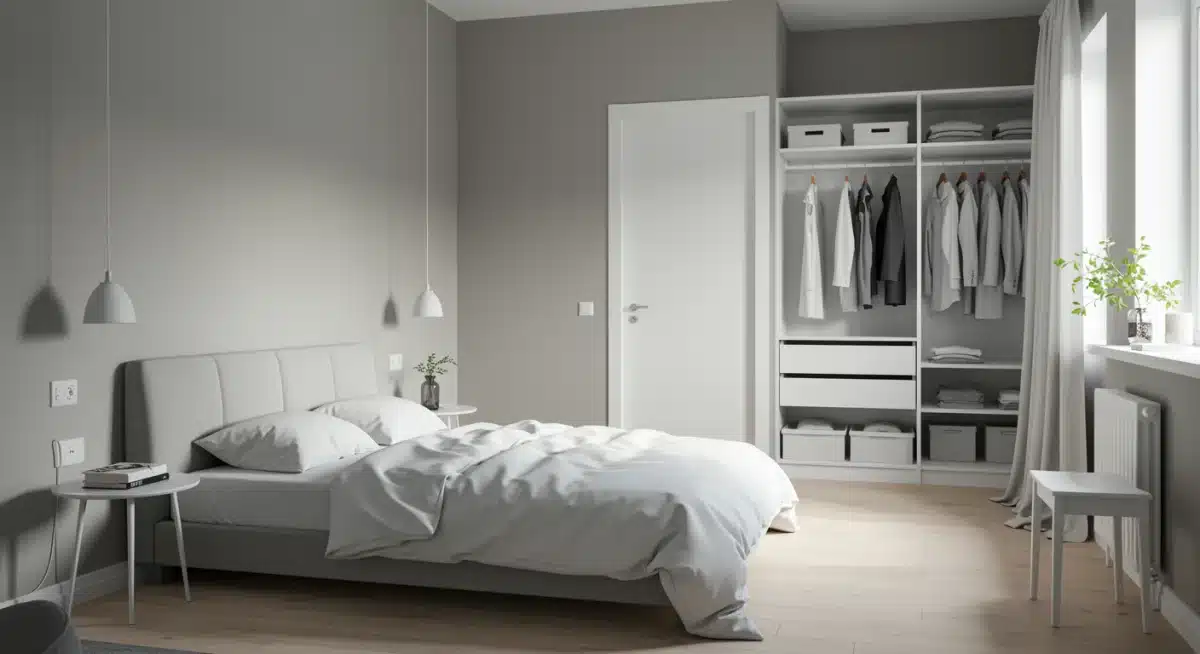
Day 4 is dedicated to the bedroom and wardrobe, often the most personal spaces in our homes. These areas can become repositories for clothes we no longer wear, sentimental items, and forgotten accessories. A thoughtful approach here is vital for achieving a truly peaceful retreat and continuing to effectively declutter home 7 days.
Start with your wardrobe. This is often the biggest challenge for many. Employ the ‘KonMari method‘ or a similar approach: take every single item of clothing out of your closet and drawers. Hold each item and ask yourself if it brings you joy, fits well, or has been worn in the last year. If not, it’s time to let it go. Be honest and realistic about what you truly need and love.
Curating Your Personal Sanctuary
Once you’ve sorted through your clothes, organize them back into your wardrobe using a system that works for you. Consider folding techniques that save space, like vertical folding, or using slim hangers. Group similar items together – all shirts, all pants, all dresses – to make choosing outfits easier. This systematic organization not only saves space but also time.
- Remove all clothing from your wardrobe and drawers.
- Categorize items into ‘Keep’, ‘Donate/Sell’, and ‘Discard’.
- Organize remaining clothes by type and color for easy access.
- Declutter nightstands, dressers, and under-bed storage.
Next, move to nightstands, dressers, and any under-bed storage. These areas often accumulate books, electronics, and miscellaneous trinkets. Keep only essentials on your nightstand: a lamp, a book, and perhaps a glass of water. Store items neatly in drawers or designated containers. The goal for your bedroom is to create a serene, clutter-free environment conducive to rest and relaxation. By the end of Day 4, your bedroom should feel like a true sanctuary, free from the visual noise of excess, pushing you closer to completing the declutter home 7 days challenge.
Day 5: Organizing the Living Room and Common Areas
The living room and other common areas like dining rooms are central to family life and entertaining, making their organization crucial for a harmonious home. Day 5 focuses on these shared spaces, aiming to create functional, aesthetically pleasing environments that reflect comfort and order. This is a key step in seeing the overall transformation of your home as you declutter home 7 days.
Begin by addressing surfaces: coffee tables, end tables, bookshelves, and entertainment centers. Remove all items and clean the surfaces thoroughly. Then, thoughtfully put back only those items that serve a purpose or truly enhance the aesthetic of the room. Consider grouping decorative items in odd numbers and leaving plenty of empty space to create a sense of calm.
Creating Inviting and Functional Spaces
Next, tackle media and electronics. Consolidate remotes, organize cables, and store DVDs/CDs (if you still have them) in a neat, accessible manner. For books, implement a ‘one in, one out’ rule if your shelves are full. Keep only those books you genuinely intend to read or cherish. The goal is to make these common areas inviting and easy to maintain.
- Clear all surfaces in the living room and common areas.
- Organize media, electronics, and cables for a tidy appearance.
- Curate bookshelves, keeping only beloved or relevant titles.
- Evaluate furniture placement for optimal flow and functionality.
Don’t forget to assess your furniture arrangement. Does it facilitate conversation? Is there enough space to move around comfortably? Sometimes, simply rearranging furniture can make a room feel more open and less cluttered. By the end of Day 5, your living room and common areas should feel more spacious, welcoming, and functional, ready for relaxation and social interaction, showcasing the benefits of your dedication to declutter home 7 days.
Day 6 & 7: Tackling Miscellaneous Spaces and Maintaining Momentum

As you approach the final days of your declutter home 7 days challenge, it’s time to address the ‘miscellaneous’ spaces that often get overlooked: home offices, laundry rooms, storage closets, or even garages. These areas, while perhaps less frequently used, can become significant clutter traps, undermining your efforts elsewhere. The final days are also about establishing routines for maintenance.
For home offices, sort through papers, files, and office supplies. Digitize documents where possible and create a clear filing system for physical papers. Keep only essential supplies on your desk, utilizing drawers and organizers for everything else. In laundry rooms, ensure all supplies are neatly stored and that any unused items are removed. Storage closets and garages might require a more robust approach, focusing on vertical storage and clear labeling.
Establishing Lasting Habits
The true success of your declutter home 7 days journey lies not just in the initial clear-out but in establishing habits that prevent clutter from returning. Dedicate 15-20 minutes each day to a ‘power purge’ – a quick tidy-up of a specific area. Implement the ‘one in, one out’ rule for new purchases, especially for clothes, books, and kitchen gadgets.
- Address home offices: digitize, file, and organize supplies.
- Clear out laundry rooms and any remaining storage closets or garage spaces.
- Implement a daily 15-20 minute ‘power purge’ routine.
- Adopt the ‘one in, one out’ rule for new purchases.
Regularly schedule mini-decluttering sessions (e.g., once a month) to prevent accumulation. Encourage all household members to participate in maintaining the newly organized spaces. Celebrate your progress and enjoy the newfound peace and functionality of your home. By the end of Day 7, you will not only have a significantly decluttered home but also the tools and habits to maintain an organized and serene living environment long-term. This ongoing commitment ensures the benefits of your declutter home 7 days effort endure.
| Key Stage | Brief Description |
|---|---|
| Preparation & Entryway | Set up your decluttering strategy and tackle the home’s first impression. |
| Kitchen & Pantry Deep Dive | Systematically organize food, utensils, and appliances for efficiency. |
| Bedroom & Wardrobe Overhaul | Create a serene personal space by decluttering clothes and personal items. |
| Maintenance & Habits | Establish routines to keep your home organized long after the 7 days. |
Frequently Asked Questions About Decluttering
Begin with a very small, manageable area, like a single drawer or a countertop section. Set a timer for 15-20 minutes and focus only on that small space. This approach helps build momentum and reduces the feeling of being overwhelmed, making the process more approachable and less daunting.
For sentimental items, consider creating a designated ‘memory box’ or a special display area. Limit the size of this container or space to encourage curation. Photograph items you can’t keep but want to remember, allowing you to cherish the memory without the physical clutter.
Implement the ‘one in, one out’ rule for new purchases: when you buy something new, get rid of an old item. Establish a daily 15-minute tidy-up routine and regularly schedule deeper decluttering sessions every few months to maintain your organized space effectively.
While decluttering by category (like all clothes, then all books) can be effective for some, starting by room is often less overwhelming for beginners. It provides visible progress in a contained space, boosting motivation. Our 7-day plan combines both approaches for optimal results.
Prioritize donating gently used items to local charities or selling them online. Recycle items that cannot be donated or sold, and dispose of hazardous waste according to local regulations. Avoid simply throwing everything into landfills; consider the environmental impact of your choices.
Conclusion
Embarking on the journey to declutter your home in 7 days is more than just a temporary fix; it’s an investment in your well-being and a commitment to a more intentional way of living. By systematically addressing each area of your home, you only create a more organized and aesthetically pleasing environment but also cultivate a sense of calm, clarity, and control. The benefits extend beyond the physical space, influencing your mental state, productivity, and overall happiness. Remember, maintaining a decluttered home is an ongoing process, but with the habits and strategies learned during this intensive week, you are well-equipped to sustain a serene and functional living space for the long term. Embrace the peace that comes with less, and enjoy the transformative power of a simplified life.