Save 15% on Energy Bills: Smart Home Automation for Comfort & Savings in 2026
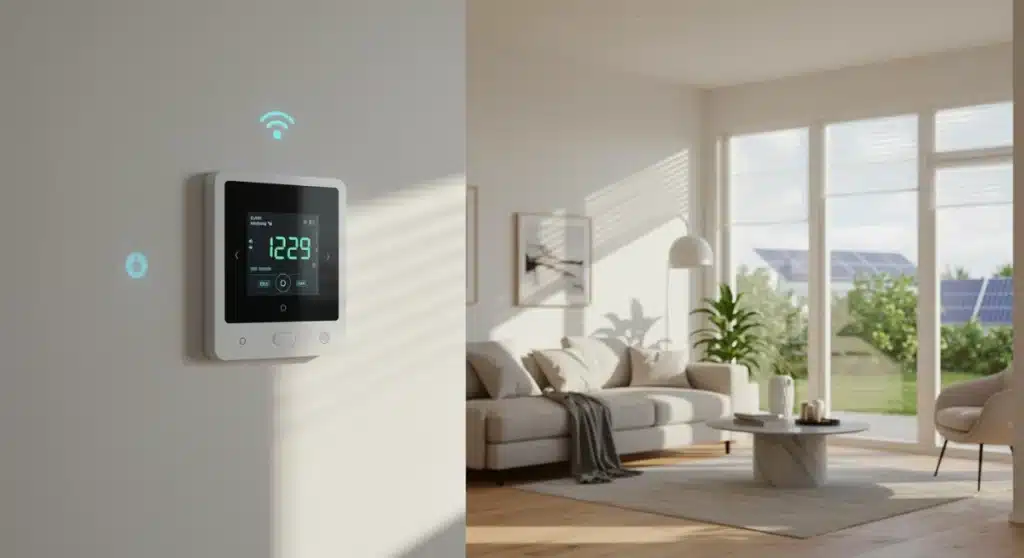
Smart home automation is projected to enable homeowners to achieve substantial reductions in their energy consumption, with an achievable goal of saving 15% on typical energy bills by 2026 through optimized system management.
Are you looking for innovative ways to significantly reduce your household expenses while simultaneously enhancing your living comfort? The answer might be closer than you think. By embracing smart home energy savings, American households can realistically aim to save 15% on energy bills by 2026, transforming their homes into more efficient, responsive, and comfortable environments. This article delves into the practical steps and technologies that make this ambitious goal not only attainable but also an integral part of modern living.
Understanding the Potential for Energy Savings with Smart Home Technology
The journey toward significant energy savings begins with understanding how smart home technology fundamentally alters our consumption patterns. Traditional homes often waste energy due to inefficient scheduling, forgotten lights, and inconsistent temperature control. Smart home systems, however, introduce a layer of intelligent management that addresses these inefficiencies head-on, leading to measurable reductions in utility costs.
These advanced systems utilize data, automation, and user preferences to optimize energy use across various household functions. From regulating your heating and cooling based on occupancy to turning off lights when a room is empty, smart technology provides a precise and proactive approach to energy management. This intelligent oversight not only saves money but also contributes to a more sustainable lifestyle, reducing your carbon footprint without sacrificing comfort.
The Core Principles of Smart Energy Management
At its heart, smart energy management relies on several key principles that work in synergy to deliver savings:
- Automation: Devices operate automatically based on pre-set schedules, sensor inputs, or learned behaviors.
- Optimization: Systems continually adjust settings to achieve peak efficiency, such as dynamic thermostat adjustments.
- Monitoring: Users gain real-time insights into energy consumption, empowering informed decisions.
- Remote Control: The ability to manage home systems from anywhere prevents energy waste from forgotten settings.
By integrating these principles, smart home technology creates a comprehensive ecosystem that is constantly working to minimize energy expenditure. The collective impact of these small, continuous adjustments adds up to substantial savings over time, making the 15% reduction goal by 2026 a realistic target for many homeowners.
Ultimately, the potential for energy savings with smart home technology is immense. It moves beyond simple convenience, offering a robust framework for financial and environmental stewardship that is becoming increasingly accessible and essential for modern households.
Key Smart Home Devices for Maximizing Energy Efficiency
To achieve the ambitious goal of saving 15% on energy bills by 2026, selecting the right smart home devices is crucial. These technologies work in concert to create an intelligent ecosystem that monitors, controls, and optimizes energy consumption across various aspects of your home. Understanding the specific benefits of each device helps in building a truly efficient smart home setup.
The market for smart home devices has expanded rapidly, offering a wide array of solutions tailored to different needs and budgets. From foundational elements like smart thermostats to more specialized applications such as smart window coverings, each device plays a vital role in the overall energy-saving strategy. The key is to integrate these devices intelligently, allowing them to communicate and coordinate actions for maximum impact.
Smart Thermostats: The Cornerstone of HVAC Savings
Smart thermostats are often considered the gateway to smart home energy efficiency due to their direct impact on heating, ventilation, and air conditioning (HVAC) costs, which typically account for the largest portion of household energy bills. These devices learn your preferences, adapt to your schedule, and can be controlled remotely, ensuring your home is only heated or cooled when necessary.
Advanced features like geofencing detect when you leave or approach home, automatically adjusting temperatures to save energy while you’re away and ensuring comfort upon your return. Furthermore, many smart thermostats provide detailed energy usage reports, offering insights into your consumption patterns and suggesting further optimizations. This proactive management significantly reduces wasted energy from an always-on or poorly scheduled HVAC system.
Smart Lighting and Plugs: Controlling the Unseen Energy Drain
Beyond HVAC, lighting and idle electronics contribute significantly to household energy consumption. Smart lighting systems allow you to control brightness, color, and scheduling from your smartphone or voice assistant. This enables you to dim lights when full illumination isn’t needed, schedule them to turn off automatically in empty rooms, or even use motion sensors to activate them only when necessary.
- Smart Bulbs: Offer customizable brightness and color, often using LED technology for inherent efficiency.
- Smart Switches: Control existing light fixtures and can be integrated into broader automation routines.
- Smart Plugs: Turn any ordinary appliance into a smart device, allowing you to remotely switch off electronics that draw ‘phantom’ power even when not in use.
By effectively managing these smaller, often overlooked energy drains, smart lighting and plugs play a crucial role in accumulating the incremental savings needed to reach the 15% target. They provide granular control over individual devices, ensuring that energy is only consumed when and where it is truly needed.
In essence, integrating these key smart home devices creates a robust framework for energy efficiency, making the goal of saving 15% on energy bills by 2026 a tangible reality through intelligent, interconnected control.
The Role of Automation and Scheduling in Reducing Energy Consumption
Automation and precise scheduling are the engines driving significant energy reductions in a smart home. These functionalities move beyond simple remote control, allowing devices to act autonomously based on predefined conditions, user habits, and environmental factors. This proactive approach ensures that energy is never wasted on unnecessary operations, making the target of saving 15% on energy bills by 2026 highly achievable.
Instead of manually adjusting settings throughout the day, smart home systems take over, silently working in the background to optimize energy use. This not only enhances efficiency but also adds a layer of convenience, freeing homeowners from constant micromanagement of their energy consumption.
Optimizing HVAC with Smart Schedules and Sensors

One of the most impactful areas for automation is your HVAC system. Smart thermostats go beyond basic programming by learning your routines and adjusting temperatures accordingly. They can pre-cool or pre-heat your home before you arrive and reduce activity when you’re away, preventing energy waste.
- Occupancy Sensors: Detect when rooms are empty and adjust HVAC settings to conserve energy.
- Geofencing: Uses your smartphone’s location to prepare your home for your arrival or switch to energy-saving mode when you leave.
- Weather Integration: Connects with local weather forecasts to anticipate heating or cooling needs, optimizing system operation.
These automated adjustments ensure that your HVAC system operates only when and how it’s most effective, eliminating the energy drain of maintaining comfortable temperatures in an empty house. The precision offered by these features is a cornerstone of achieving substantial savings.
Automating Lighting and Appliance Usage
Beyond climate control, automation extends to lighting and various appliances, providing further opportunities for energy reduction. Smart lighting can be programmed to turn on and off based on natural light levels, time of day, or occupancy, preventing lights from being left on unnecessarily.
Smart plugs allow you to schedule power to appliances, ensuring they are only active when needed and eliminating phantom load. Imagine your coffee maker starting automatically before you wake up, but turning off completely once the coffee is brewed, or your entertainment system powering down fully when not in use.
The power of automation and scheduling lies in their ability to remove human error and forgetfulness from the energy equation. By establishing intelligent routines, smart homes can consistently maintain optimal energy consumption levels, paving the way for significant financial savings and a noticeable reduction in your overall environmental impact.
Integrating Smart Home Systems for Holistic Energy Management
Achieving maximum energy savings isn’t just about installing individual smart devices; it’s about integrating them into a cohesive system that communicates and cooperates. A truly holistic smart home energy management system ensures that all components work together seamlessly, leading to optimized performance and greater savings. This integrated approach is essential for realizing the full potential of smart home technology and reaching the goal of saving 15% on energy bills by 2026.
Without proper integration, devices might operate in isolation, potentially missing opportunities for combined efficiencies. A unified system, however, allows different devices to share data and trigger actions across categories, creating a more intelligent and responsive environment.
Centralized Control Hubs and Platforms
The foundation of an integrated smart home often lies in a central control hub or a universal smart home platform. These hubs act as the brain of your smart home, allowing various devices from different manufacturers to connect, communicate, and be managed from a single interface. Popular platforms include Amazon Alexa, Google Home, Apple HomeKit, and Samsung SmartThings.
Through these platforms, you can create complex automation routines (often called ‘scenes’ or ‘routines’) that involve multiple devices. For example, a ‘Leaving Home’ routine could simultaneously turn off all lights, adjust the thermostat to an energy-saving temperature, lock the doors, and arm the security system. This multi-device coordination prevents wasted energy across several fronts with a single command or trigger.
Cross-Device Automation and Sensor Integration
- Motion Sensors and Lighting: Motion sensors can be integrated with smart lights to ensure lights only turn on when a room is occupied and turn off after a period of inactivity. This is particularly effective in bathrooms, hallways, and utility rooms.
- Temperature Sensors and Window Coverings: Integrating smart thermostats with smart blinds or shades allows the system to automatically adjust window coverings to block intense sunlight on hot days, reducing the load on your air conditioning, or open them on cold, sunny days to leverage passive solar heating.
- Door/Window Sensors and HVAC: Sensors on doors and windows can be linked to your HVAC system, automatically pausing heating or cooling if a window or door is left open for an extended period, preventing energy from literally escaping your home.
This level of cross-device automation ensures that your home is constantly working to conserve energy, not just through individual device actions, but through a synchronized effort. The more devices you integrate and the more intelligent your automation routines become, the closer you get to maximizing your energy savings and enhancing your home’s overall efficiency.
Ultimately, a well-integrated smart home system delivers superior energy management, providing the comprehensive control necessary to significantly reduce your energy footprint and achieve your financial goals.
Practical Steps to Implement Smart Home Energy Solutions
Implementing smart home energy solutions doesn’t have to be an overwhelming process. By taking a structured approach, homeowners can gradually transition to a more energy-efficient setup, making the journey toward saving 15% on energy bills by 2026 both manageable and rewarding. The key is to start small, prioritize high-impact areas, and expand your system over time.
Begin by identifying the biggest energy drains in your home. For most households, this will be heating and cooling, followed by lighting and electronics. Focusing on these areas first will yield the most significant initial savings and provide motivation to continue expanding your smart home capabilities.
Starting with High-Impact Devices
The most effective initial step is to invest in devices that offer the greatest return on investment in terms of energy savings. As previously mentioned, smart thermostats are often the top choice due to their direct influence on HVAC costs. Installing one of these early on can immediately begin to generate savings.
Next, consider smart lighting in frequently used rooms or areas where lights are often left on inadvertently. Replacing traditional bulbs with smart LED bulbs or installing smart switches can drastically cut down on lighting-related energy consumption. Similarly, smart plugs can address phantom load from electronics that are always plugged in, even when not in use.
- Phase 1: Install a smart thermostat and a few smart bulbs/plugs in high-traffic areas.
- Phase 2: Expand smart lighting to more rooms and add smart plugs for entertainment systems and home offices.
- Phase 3: Introduce advanced sensors (motion, door/window) and integrate them with existing devices for enhanced automation.
By phasing in your smart home implementation, you can manage costs and gradually learn how to best utilize the technology for your specific lifestyle and home layout.
Setting Up Automation Routines and Monitoring
Once your devices are installed, the next crucial step is to configure automation routines. This involves connecting your devices through a central hub or platform and setting up rules for how they interact. Experiment with different schedules and triggers to find what works best for your household’s rhythm.

Regularly monitoring your energy usage through the apps provided by your smart devices is also vital. Most smart thermostats and smart plugs offer detailed insights into consumption patterns. Analyzing this data can reveal areas where further optimization is possible, helping you fine-tune your settings for even greater efficiency. This iterative process of implementation, automation, and monitoring is key to maximizing your energy savings.
By following these practical steps, homeowners can confidently embark on their smart home journey, steadily progressing towards a more energy-efficient and cost-effective living environment.
Overcoming Challenges and Ensuring Long-Term Savings
While the prospect of saving 15% on energy bills by 2026 through smart home automation is exciting, it’s important to acknowledge and address potential challenges. Like any technological adoption, there can be hurdles, but with proper planning and maintenance, long-term savings are well within reach. Understanding these challenges upfront helps in preparing for them and ensuring a smooth, effective transition to an energy-efficient smart home.
Common concerns include initial setup complexity, interoperability issues between different brands, and cybersecurity vulnerabilities. However, the industry is rapidly evolving, with solutions continually emerging to simplify the user experience and enhance security.
Addressing Setup and Interoperability Concerns
One of the primary challenges for new smart home users is the initial setup and ensuring all devices work together seamlessly. To mitigate this, consider choosing devices that are known to be compatible with a popular smart home ecosystem (e.g., Google Home, Amazon Alexa, Apple HomeKit) or opting for devices from the same manufacturer when possible. Many platforms offer step-by-step guides and community support to assist with installation and configuration.
For interoperability, look for devices that support open standards like Matter, which aims to unify smart home communication across brands. This will simplify future integrations and reduce dependency on proprietary systems. Investing a little time in research before purchasing can save a lot of frustration later on.
- Research Compatibility: Check device specifications for platform compatibility (e.g., ‘Works with Alexa’).
- Start Simple: Begin with a few essential devices and gradually expand your system.
- Utilize Tutorials: Leverage online guides and manufacturer tutorials for smooth setup.
By being mindful of compatibility and taking a phased approach, the initial complexities of smart home setup can be effectively managed, ensuring a positive user experience and a solid foundation for energy savings.
Maintaining Security and Optimizing Performance
Cybersecurity is a critical consideration for any connected home. Ensure all your smart devices are purchased from reputable brands that prioritize security updates. Regularly change default passwords, enable two-factor authentication where available, and keep your home network secure with a strong, unique password. Firmware updates often include security patches, so ensure your devices are always running the latest software.
To ensure long-term savings, periodically review your automation routines and energy usage reports. As your habits change or new, more efficient technologies become available, you may find opportunities to further optimize your settings. The smart home ecosystem is dynamic, and staying engaged with its capabilities will help you maintain and even increase your energy savings over time, solidifying the 15% reduction goal by 2026 as a sustainable reality.
By proactively addressing these challenges, homeowners can fully harness the power of smart home technology, enjoying both enhanced comfort and sustained energy savings.
The Future of Smart Home Energy Efficiency and Beyond 2026
As we look towards 2026 and beyond, the evolution of smart home energy efficiency promises even greater advancements and more profound impacts on our daily lives and the environment. The 15% energy savings goal is just a stepping stone, as continuous innovation in artificial intelligence, machine learning, and interconnected device ecosystems will unlock unprecedented levels of optimization. The future smart home will not only save energy but will actively participate in a smarter, more resilient energy grid, redefining our relationship with consumption.
The pace of technological development suggests that upcoming years will bring more intuitive, self-learning systems that require even less user intervention. These next-generation smart homes will be proactive, anticipating needs and making adjustments with increasing precision, further cementing their role in sustainable living.
Advancements in AI and Predictive Analytics
Future smart home systems will heavily leverage advanced AI and predictive analytics to optimize energy use. Instead of simply reacting to conditions or following schedules, these systems will learn complex patterns of occupancy, weather, and even utility pricing. They will anticipate when energy demand is highest or cheapest and adjust consumption accordingly, potentially integrating with smart grids to balance load and reduce strain on infrastructure.
- Dynamic Pricing Integration: Systems will automatically shift energy-intensive tasks (e.g., charging EVs, running dishwashers) to off-peak hours when electricity is cheaper.
- Hyper-Personalized Comfort: AI will learn individual preferences at a granular level, ensuring optimal comfort with minimal energy expenditure.
- Proactive Maintenance: Smart devices will predict potential failures in appliances or HVAC systems, allowing for preventative maintenance that avoids costly breakdowns and ensures continuous efficiency.
This level of intelligence moves beyond simple automation, creating a truly responsive and adaptive home environment that maximizes both comfort and savings.
Sustainable Living and Grid Integration
Beyond individual household savings, the future of smart home technology is deeply intertwined with broader sustainability goals and grid integration. Smart homes will become active participants in a decentralized energy landscape, potentially generating their own power through solar panels and storing it in home batteries. They will communicate with the grid, selling excess energy back and drawing power when it’s most efficient.
This vision extends beyond merely saving money; it encompasses creating homes that are net-zero or even net-positive in terms of energy consumption, significantly reducing their environmental footprint. The synergy between smart home automation, renewable energy sources, and intelligent grid management represents a powerful pathway towards a more sustainable and equitable energy future, far exceeding the initial 15% savings by 2026.
The ongoing evolution of smart home technology promises not only continued financial benefits for homeowners but also a pivotal role in the global effort towards environmental stewardship and energy independence.
| Key Aspect | Brief Description |
|---|---|
| Smart Thermostats | Automate HVAC based on schedules, occupancy, and remote control for significant savings. |
| Smart Lighting & Plugs | Control illumination and eliminate ‘phantom load’ for electronics, reducing electricity waste. |
| Integrated Systems | Centralized hubs and cross-device automation for holistic energy management and efficiency. |
| Automation & Scheduling | Program devices to operate only when needed, minimizing human error and energy waste. |
Frequently Asked Questions About Smart Home Energy Savings
While savings vary based on existing habits and home efficiency, many households can expect to save between 10% to 20%. Our goal of 15% by 2026 is a well-researched and achievable target for most American homeowners who strategically implement smart home energy solutions.
Smart thermostats are typically the most impactful due to their control over HVAC, which is a major energy user. Smart lighting, smart plugs for managing electronics, and smart window coverings also offer significant contributions to overall energy savings.
Many modern smart home devices are designed for easy, DIY installation. While some advanced integrations might require professional assistance, most basic setups like smart thermostats or plugs can be managed by the average homeowner with instructional guides and online resources.
Absolutely. By intelligently anticipating your needs and adjusting settings proactively, smart home systems ensure your environment is comfortable when you need it, without wasting energy when you don’t. This precision leads to both savings and a more tailored living experience.
Beyond the initial investment in devices, ongoing costs are generally minimal, primarily consisting of internet service and occasional battery replacements for some sensors. Most smart home platforms do not require monthly subscriptions for basic energy management features, making them a cost-effective long-term solution.
Conclusion
The vision of saving 15% on energy bills by 2026 through smart home automation is not merely aspirational; it is a tangible and achievable goal for American households. By strategically adopting and integrating smart thermostats, lighting, plugs, and other intelligent devices, homeowners can exert precise control over their energy consumption, eliminating waste and optimizing comfort. The journey involves understanding the potential of automation, making informed choices about technology, and committing to a more efficient lifestyle. As smart home technology continues to evolve, it promises even greater savings and a future where our homes are not just comfortable sanctuaries but also active participants in a sustainable energy ecosystem, delivering both financial benefits and peace of mind.