Set Meaningful Goals for 2026: Your Guide to Success

Setting meaningful goals is crucial for personal development and achieving success in 2026, requiring a clear vision, actionable steps, and consistent effort to transform aspirations into tangible accomplishments.
As we approach 2026, the opportunity to redefine our paths and achieve significant milestones becomes clearer. This guide will help you set meaningful goals, providing a step-by-step framework to define your vision and ensure lasting success in the coming year and beyond. Let’s embark on this journey of personal growth and accomplishment together.
Understanding the ‘Why’ Behind Your Goals
Before diving into the specifics of what you want to achieve, it’s vital to explore the underlying motivations. Understanding your ‘why’ provides the emotional fuel and resilience needed to overcome obstacles and stay committed to your objectives. Without a strong ‘why,’ even the most well-formulated goals can falter under pressure or when faced with unexpected challenges.
Many people jump straight into setting goals without truly connecting them to their core values or long-term aspirations. This often leads to goals that feel hollow or uninspiring, making it difficult to maintain momentum. Take the time to reflect on what truly matters to you, what kind of life you envision, and what impact you wish to make.
Connecting Goals to Core Values
Your goals should be an extension of your deepest values. If integrity is a core value, perhaps a goal related to ethical leadership in your career would resonate more profoundly than simply aiming for a promotion. When goals align with values, they feel authentic and inherently motivating. This alignment creates a powerful internal drive that propels you forward, even when the path becomes difficult.
- Identify your top 3-5 core values.
- Reflect on how your current life aligns with these values.
- Consider how potential goals can strengthen this alignment.
Envisioning Your Ideal Future
Picture yourself in 2026, having achieved your most meaningful goals. What does that look like? How does it feel? This vivid mental imagery serves as a powerful motivator and helps solidify your commitment. Don’t just think about what you want to do; think about who you want to become. This holistic approach ensures your goals are not just tasks to be checked off, but catalysts for personal transformation.
The ‘why’ is not a static concept; it can evolve as you grow and learn. Regularly revisiting your motivations ensures your goals remain relevant and inspiring. This introspection is a continuous process that strengthens your resolve and clarifies your purpose. Truly understanding why you want something is the first and most critical step towards actually achieving it.
In essence, establishing a strong foundation for your goals begins with deep introspection. By connecting your aspirations to your core values and envisioning a compelling future, you create a powerful internal compass that will guide you through the goal-setting process and beyond. This foundational work sets the stage for more effective planning and execution.
Defining Your Vision for 2026: The Clarity Blueprint
Once you understand your ‘why,’ the next step is to translate that motivation into a clear and compelling vision for 2026. A vague vision leads to vague goals, which are notoriously difficult to achieve. Your vision should be a detailed, inspiring picture of what success looks like in various areas of your life.
Think of your vision as a blueprint for your future. Just as an architect needs a detailed plan before construction, you need a precise vision before building your goals. This clarity helps you filter out distractions and focus your energy on what truly matters for your personal and professional growth.
SMART Goals: A Timeless Framework
The SMART framework is a classic and highly effective method for defining goals. It ensures your objectives are well-defined and achievable, making the path to success much clearer. Applying this framework helps transform abstract desires into concrete targets.
- Specific: Clearly define what you want to achieve. No ambiguity.
- Measurable: How will you track progress and know when you’ve succeeded?
- Achievable: Is the goal realistic given your resources and constraints?
- Relevant: Does it align with your values and overall vision for 2026?
- Time-bound: Set a clear deadline to create urgency and accountability.
Breaking Down Your Vision into Life Areas
Your life isn’t a single entity; it’s a collection of interconnected areas. To create a balanced and meaningful vision, consider setting goals across different domains such as career, health, relationships, personal growth, and finances. This holistic approach ensures success in one area doesn’t come at the expense of another.
For each life area, articulate what an ideal 2026 would look like. What specific accomplishments would bring you satisfaction? What changes would significantly improve your well-being? This granular approach allows you to develop a comprehensive vision that supports all facets of your life.
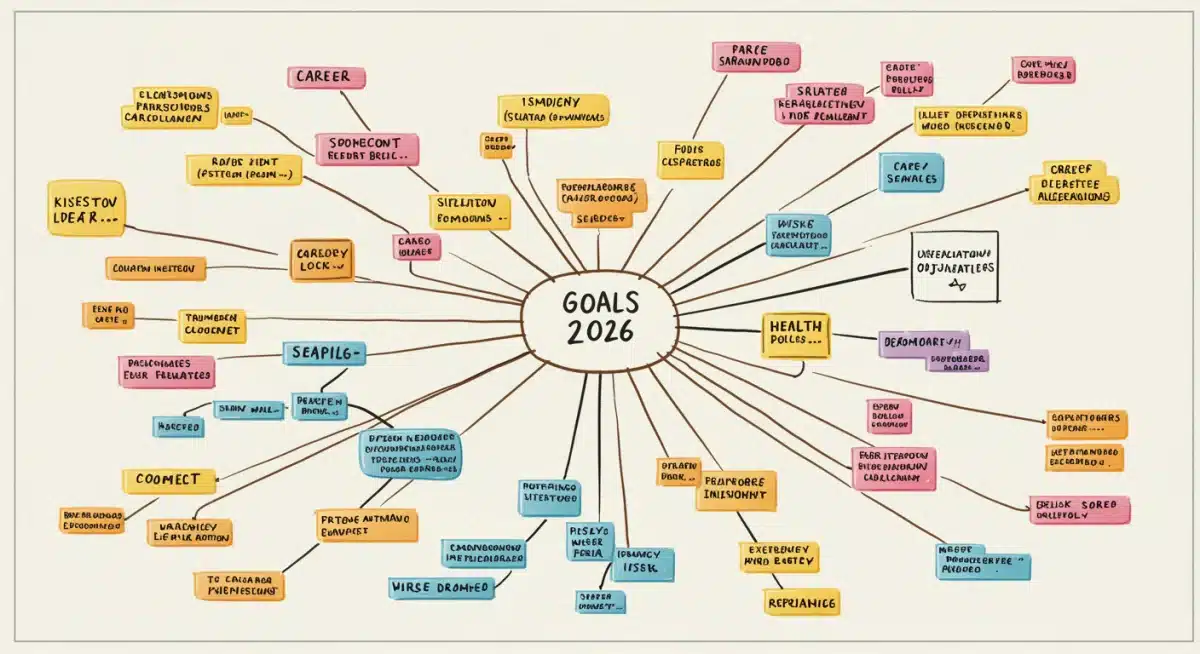
By defining your vision with precision and applying the SMART framework, you create a solid foundation for your goal-setting journey. This clarity acts as a powerful guiding light, helping you make informed decisions and stay on track as you move towards achieving your aspirations for 2026. A well-defined vision is the cornerstone of effective goal setting.
Crafting Actionable Steps: The Path to Realization
A vision, no matter how clear, remains a dream without actionable steps. This stage is about translating your broad goals into specific, manageable tasks that you can begin working on immediately. The journey of a thousand miles begins with a single step, and the same applies to achieving your most ambitious goals.
The key here is to break down large, daunting goals into smaller, more approachable tasks. This not only makes the goal seem less overwhelming but also provides a clear roadmap for progress. Each small step completed builds momentum and reinforces your commitment, making the overall journey more enjoyable and sustainable.
Reverse Engineering Your Goals
Start with your 2026 goal and work backward. What needs to happen right before you achieve it? And before that? Continue this process until you reach the present day. This method helps identify all necessary prerequisites and milestones, creating a logical sequence of actions.
- Identify the ultimate goal for 2026.
- Determine major milestones leading up to it.
- Break down each milestone into smaller, weekly or daily tasks.
Establishing Milestones and Deadlines
Milestones serve as checkpoints along your journey, allowing you to celebrate progress and make adjustments if necessary. Assigning mini-deadlines to these milestones adds an extra layer of accountability and keeps you motivated. Without these intermediate targets, it’s easy to lose steam or procrastinate.
Think of milestones as mini-victories that fuel your motivation. They provide concrete evidence that you are moving in the right direction, reinforcing the belief that your ultimate goal is indeed achievable. Regularly reviewing these milestones helps you stay on track and course-correct as needed, ensuring continuous progress.
The transition from abstract goals to concrete actions is perhaps the most critical phase of goal setting. By meticulously breaking down your vision into actionable steps and setting clear milestones, you transform wishful thinking into a practical plan for success. This systematic approach empowers you to take consistent, meaningful action towards your 2026 objectives.
Building Resilience and Overcoming Obstacles
The path to achieving meaningful goals is rarely linear. You will undoubtedly encounter challenges, setbacks, and moments of self-doubt. Building resilience and developing strategies to overcome these obstacles are just as important as setting the goals themselves. True success lies not in avoiding difficulties, but in effectively navigating them.
Resilience isn’t something you’re born with; it’s a skill that can be developed and strengthened over time. It involves learning from failures, adapting to change, and maintaining a positive outlook even when things don’t go as planned. Preparing for potential roadblocks allows you to respond proactively rather than reactively.
Anticipating Challenges and Developing Contingency Plans
Proactive planning involves identifying potential obstacles before they arise. What could go wrong? What resources might you lack? By brainstorming these challenges, you can develop contingency plans, minimizing their impact when they do occur. This foresight transforms potential roadblocks into minor detours.
- List potential internal obstacles (e.g., procrastination, fear).
- List potential external obstacles (e.g., unexpected expenses, time constraints).
- Brainstorm specific solutions or mitigation strategies for each.
Cultivating a Growth Mindset
A growth mindset, the belief that your abilities can be developed through dedication and hard work, is crucial for resilience. Instead of viewing setbacks as failures, see them as learning opportunities. This perspective shift empowers you to persist, adapt, and ultimately grow through adversity.
Embracing a growth mindset means understanding that effort and strategy are key to improvement. When you face a challenge, instead of thinking ‘I can’t do this,’ ask ‘How can I do this differently?’ or ‘What can I learn from this experience?’ This way of thinking fosters continuous improvement and strengthens your ability to overcome future hurdles.
Ultimately, the ability to bounce back from setbacks and adapt to unforeseen circumstances is a hallmark of successful goal achievers. By building resilience and embracing a growth mindset, you equip yourself with the mental fortitude required to navigate the complexities of your journey and emerge stronger, closer to your 2026 goals.
Tracking Progress and Celebrating Milestones
Consistent progress tracking and celebrating achievements are vital for maintaining motivation and reinforcing positive habits. Without regular check-ins, it’s easy to lose sight of how far you’ve come or to drift off course. This ongoing feedback loop is essential for sustained effort and ultimate success.
Tracking isn’t just about noting what you’ve done; it’s about understanding what’s working, what isn’t, and why. It provides valuable data that can inform adjustments to your strategy, ensuring you remain efficient and effective in your pursuit of your 2026 goals. Celebration, on the other hand, provides the emotional reward that keeps you engaged and enthusiastic.
Implementing Effective Tracking Systems
Whether it’s a simple spreadsheet, a dedicated app, or a physical journal, choose a tracking system that works for you. Regular reviews (daily, weekly, or monthly) help you assess your progress, identify areas for improvement, and stay accountable. Consistency in tracking is more important than the complexity of the system.

Visual aids can be incredibly powerful. A progress bar, a habit tracker, or even a simple chart can provide a clear and satisfying visual representation of your achievements. Seeing your progress visually can be a significant motivator, especially during challenging periods.
The Power of Celebration and Self-Reward
Don’t wait until you’ve achieved your ultimate 2026 goal to celebrate. Acknowledge and reward yourself for reaching smaller milestones along the way. These mini-celebrations boost your morale, prevent burnout, and reinforce the positive association with your efforts. The rewards don’t have to be grand; they just need to be meaningful to you.
- Plan small, specific rewards for reaching milestones.
- Take time to reflect on your accomplishments.
- Share your progress with a trusted friend or mentor for external validation.
By diligently tracking your progress and consciously celebrating each step forward, you create a self-sustaining cycle of motivation and achievement. This systematic approach ensures that you not only work towards your goals but also enjoy the journey, making your pursuit of success in 2026 both productive and fulfilling.
Adapting and Evolving Your Goals for Long-Term Success
The world around us is constantly changing, and so are we. What seemed like a meaningful goal at the beginning of 2026 might need adjustment as circumstances evolve or as you gain new insights. Flexibility and the willingness to adapt your goals are crucial for long-term success and continuous personal development.
Rigid adherence to an outdated goal can be counterproductive, leading to frustration and wasted effort. Instead, view your goals as living documents that can be refined and re-aligned with your evolving vision. This adaptive approach ensures your efforts remain relevant and impactful, leading to sustained progress over time.
Regular Review and Re-evaluation
Schedule periodic reviews of your goals, perhaps quarterly or semi-annually. During these sessions, assess whether your goals still align with your values and current aspirations. Are they still relevant? Are they still achievable? Be honest with yourself and be prepared to make necessary changes.
This re-evaluation process is not a sign of failure but rather a demonstration of maturity and strategic thinking. It allows you to pivot when necessary, taking advantage of new opportunities or adjusting to unforeseen challenges. A dynamic approach to goal setting keeps your vision fresh and your motivation high.
Learning from Experience and Adjusting Course
Every experience, whether a success or a setback, offers valuable lessons. Analyze what worked well and what didn’t. Use these insights to refine your strategies, improve your approach, and make your future goal-setting even more effective. This continuous learning cycle is fundamental to long-term growth.
- Reflect on past successes and failures.
- Identify new skills or knowledge gained.
- Adjust your strategies based on new information or circumstances.
Embracing a flexible and adaptive mindset towards your goals is key to navigating the complexities of life and maintaining momentum towards your vision. By regularly reviewing, re-evaluating, and learning from your experiences, you ensure your goals remain meaningful and your journey towards success in 2026 is both dynamic and ultimately rewarding.
Integrating Habits for Sustainable Achievement
Goals are often achieved not through monumental efforts, but through the consistent application of small, positive habits. Integrating beneficial habits into your daily routine is the most sustainable way to make continuous progress towards your 2026 objectives. Habits automate positive behaviors, reducing the need for constant willpower.
The power of habits lies in their cumulative effect. Small, consistent actions, performed daily, can lead to significant results over time. Instead of relying solely on motivation, which can fluctuate, building strong habits ensures that you continue to move forward, even on days when your motivation is low.
Identifying Key Habits for Your Goals
For each major goal, identify the specific habits that would most directly contribute to its achievement. For instance, if your goal is to write a book, a key habit might be writing for 30 minutes every morning. If it’s about fitness, it could be a daily 20-minute walk.
- List your main goals for 2026.
- For each goal, brainstorm 1-3 daily or weekly habits that would support it.
- Focus on habits that are small, specific, and easy to start.
Strategies for Habit Formation
Several strategies can help you successfully integrate new habits. Starting small, making the habit obvious, attractive, easy, and satisfying can significantly increase your chances of success. Coupling new habits with existing ones (habit stacking) is also a powerful technique.
Remember that consistency is more important than intensity in the early stages of habit formation. Don’t aim for perfection; aim for consistency. Even a few minutes dedicated to a new habit each day is more effective than sporadic, intense bursts of effort. Over time, these small, consistent actions will compound into significant progress.
By consciously identifying and integrating key habits into your daily life, you create an automatic pathway to achieving your 2026 goals. This focus on sustainable, consistent action transforms your aspirations into an embedded part of your routine, ensuring long-term success and personal growth.
| Key Step | Brief Description |
|---|---|
| Understand ‘Why’ | Connect goals to core values and envision ideal future for deep motivation. |
| Define Vision | Use the SMART framework to create clear, measurable, and time-bound goals. |
| Craft Actions | Break down goals into small, actionable steps with clear milestones and deadlines. |
| Build Resilience | Anticipate obstacles, develop contingency plans, and cultivate a growth mindset. |
Frequently Asked Questions About Goal Setting for 2026
A meaningful goal for 2026 is one that deeply resonates with your core values, contributes to your personal growth, and aligns with your long-term vision. It should inspire you, provide a sense of purpose, and feel genuinely important to your overall well-being and desired future.
It’s advisable to review your goals regularly. Daily or weekly check-ins for progress tracking are beneficial, while a more comprehensive re-evaluation of your overall goals and vision should ideally occur quarterly or semi-annually. This allows for necessary adjustments and ensures continued relevance.
Falling behind is a normal part of the process. Instead of giving up, analyze what went wrong without judgment. Adjust your strategy, break down tasks further, or realign your timeline if needed. Remember, progress is rarely linear, and resilience means adapting and restarting.
Absolutely. Goals are not set in stone. As you grow, learn, and experience new things, your priorities and aspirations may shift. It’s healthy to adapt and evolve your goals to reflect your current self and circumstances, ensuring they remain relevant and inspiring to you.
Habits are the building blocks of achievement. By integrating small, consistent actions into your daily routine, you automate progress towards your goals. This reduces reliance on willpower and ensures continuous movement forward, even on days when motivation is low, leading to sustainable long-term success.
Conclusion
The journey to set meaningful goals for 2026 is a profound act of self-discovery and intentional living. It’s about more than just ticking items off a list; it’s about crafting a vision that truly resonates with who you are and who you aspire to become. By understanding your ‘why,’ defining a clear vision, breaking it down into actionable steps, building resilience, consistently tracking progress, and integrating supportive habits, you lay a robust foundation for a year of remarkable achievement and personal growth. Embrace this structured approach, remain flexible in your execution, and celebrate every step of your progress. Your success in 2026 is not just a possibility; it’s a journey you actively construct, day by day, habit by habit, with purpose and unwavering commitment.