Improve Your Memory: Simple Techniques to Boost Your Recall by 50%

Boosting memory recall by 50% is achievable through consistent application of targeted cognitive strategies, lifestyle adjustments, and practical memorization techniques, enhancing daily performance and overall cognitive function.
Have you ever wished you could remember names, facts, or where you left your keys with greater ease? For many, the idea of significantly enhancing memory feels like a distant dream. However, with the right strategies, it’s entirely possible to improve your memory: simple techniques to boost your recall by 50%. This article will guide you through practical methods to sharpen your cognitive abilities and unlock your brain’s full potential.
Understanding how memory works
Before diving into techniques, it’s crucial to understand the basic mechanics of how memory operates. Our memory isn’t a single entity but a complex system involving multiple stages: encoding, storage, and retrieval. Each stage plays a vital role in how well we remember information.
Encoding is the initial process of transforming sensory information into a form that can be stored in the brain. This can happen through various channels, such as visual, auditory, or semantic. The more attention and processing an item receives during encoding, the more likely it is to be remembered.
The three stages of memory
Our memory system can be broadly categorized into three distinct stages, each with its own characteristics and limitations.
- Sensory memory: This is the shortest form of memory, lasting only a fraction of a second. It retains sensory information (sights, sounds, smells) long enough for it to be transferred to short-term memory.
- Short-term memory (STM): Also known as working memory, STM holds a small amount of information for a brief period, typically around 20-30 seconds, unless actively rehearsed. It’s where we process information consciously.
- Long-term memory (LTM): This is the vast storage system for information that can be retained for extended periods, from minutes to a lifetime. LTM has seemingly limitless capacity and is crucial for learning and retention.
Each of these stages influences the others. For instance, effective encoding is necessary for information to move from short-term to long-term memory. Understanding these stages provides a foundation for appreciating why certain memory techniques are effective.
In essence, memory is a dynamic process, not a static storage unit. By understanding its components, we can better target our efforts to strengthen each stage and improve our overall recall capabilities. This foundational knowledge empowers us to apply techniques more strategically.
The power of active recall and spaced repetition
One of the most effective strategies to improve memory is the combination of active recall and spaced repetition. These two techniques work synergistically to strengthen neural pathways and ensure information is deeply embedded in long-term memory. They move beyond passive review, demanding your brain actively retrieve information.
Active recall, also known as practice testing, involves retrieving information from memory without looking at your notes or textbook. Instead of simply re-reading material, you actively test yourself on it. This process forces your brain to work harder, which in turn strengthens the memory trace.
Implementing active recall in your studies
There are several practical ways to integrate active recall into your daily learning routine.
- Flashcards: Create flashcards with questions on one side and answers on the other. Regularly quiz yourself, trying to recall the answer before flipping the card.
- Self-quizzing: After reading a chapter or attending a lecture, close your book or notes and try to summarize what you’ve learned in your own words. Ask yourself questions about the material.
- Teaching others: Explaining a concept to someone else is a powerful form of active recall. It forces you to organize your thoughts and articulate the information clearly.
Spaced repetition, on the other hand, involves reviewing information at increasing intervals over time. Instead of cramming, which leads to temporary retention, spaced repetition takes advantage of the ‘spacing effect’ – the phenomenon that learning is more effective when study sessions are spaced out.
Combining active recall with spaced repetition
The true power lies in combining these two methods. For example, using flashcards with a spaced repetition system (like Anki or Quizlet) allows you to actively recall information at optimal intervals. This ensures that you review information just as you’re about to forget it, solidifying it in your long-term memory.
The effectiveness of active recall and spaced repetition has been extensively studied and proven in cognitive psychology. By consistently applying these techniques, you’re not just memorizing; you’re building a robust and resilient memory system that can boost your recall significantly over time. This approach is fundamental for anyone serious about lasting memory improvement.
Lifestyle factors influencing memory
While specific techniques are vital, your daily lifestyle choices profoundly impact your memory function. Neglecting these fundamental aspects can hinder even the most diligent memory training efforts. A holistic approach that integrates healthy living with cognitive exercises yields the best results for memory enhancement.
Adequate sleep is paramount for memory consolidation. During sleep, particularly deep REM sleep, the brain actively processes and reorganizes information learned throughout the day, transferring it from short-term to long-term storage. Chronic sleep deprivation can severely impair your ability to form new memories and recall existing ones.
The critical role of sleep
Aim for 7-9 hours of quality sleep each night. Establish a consistent sleep schedule, create a relaxing bedtime routine, and ensure your sleep environment is dark, quiet, and cool. Avoiding screens before bed and limiting caffeine and alcohol intake can also significantly improve sleep quality.
Nutrition also plays a significant role in brain health and memory. A diet rich in antioxidants, omega-3 fatty acids, and B vitamins can protect brain cells and support cognitive function. Conversely, diets high in processed foods and sugar can lead to inflammation and negatively impact memory.
Dietary choices for a sharper mind
- Omega-3 fatty acids: Found in fatty fish (salmon, mackerel), flaxseeds, and walnuts, these are crucial for brain cell structure and function.
- Antioxidants: Berries, dark leafy greens, and dark chocolate help protect brain cells from damage.
- B vitamins: Whole grains, eggs, and legumes support neurotransmitter production and energy metabolism in the brain.
- Hydration: Even mild dehydration can impair cognitive function, including memory. Drink plenty of water throughout the day.
Regular physical activity is another cornerstone of memory improvement. Exercise increases blood flow to the brain, delivering essential oxygen and nutrients. It also stimulates the growth of new brain cells and enhances the connections between them, leading to improved memory and learning capabilities.
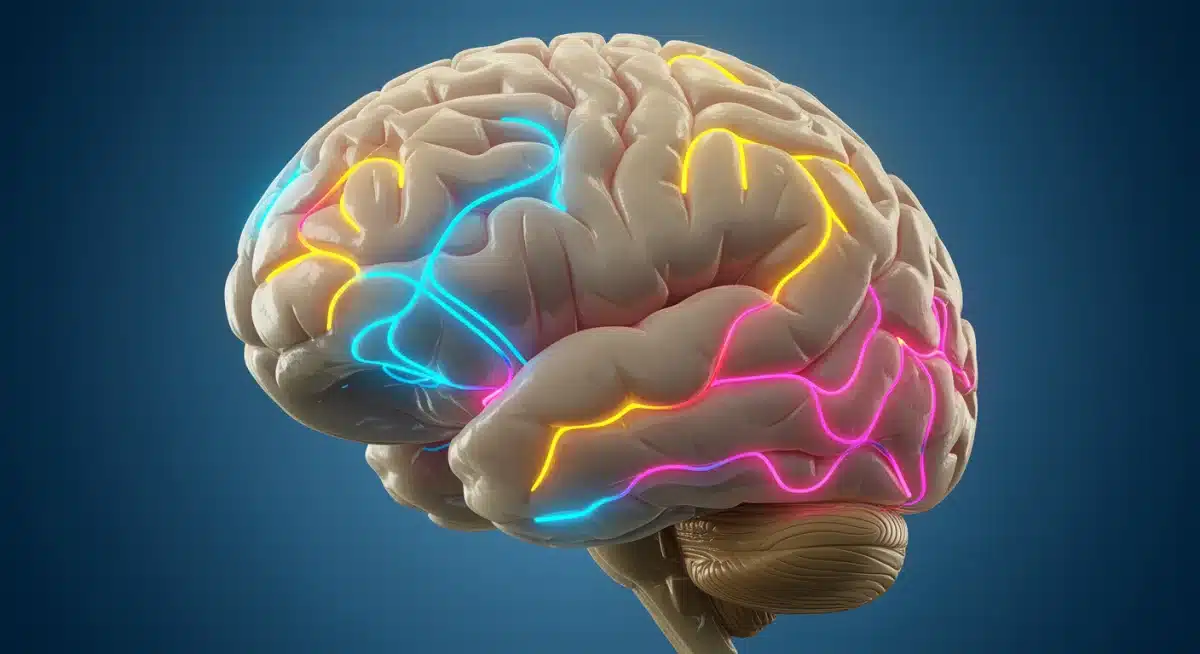
Managing stress is equally important. Chronic stress can release hormones like cortisol, which, in excess, can damage brain cells in the hippocampus, a region critical for memory formation. Techniques such as meditation, yoga, or spending time in nature can help mitigate stress levels.
By consciously optimizing these lifestyle factors – sleep, nutrition, exercise, and stress management – you create an optimal environment for your brain to thrive. These habits are not just beneficial for general health but are direct contributors to a stronger, more efficient memory that can significantly boost your recall.
Mnemonic devices and visualization techniques
Mnemonic devices are powerful tools that help you remember difficult information by associating it with something easier to recall. They leverage the brain’s natural ability to remember vivid, imaginative, and unusual information. When combined with visualization, these techniques can dramatically improve memory recall, especially for lists, sequences, and complex data.
The core principle behind mnemonics is to create a strong, memorable link between new information and existing knowledge. This link acts as a retrieval cue, making it easier to access the stored information when needed. They transform abstract data into concrete, imaginative scenarios.
Popular mnemonic strategies
- Acronyms and Acrostics: Acronyms use the first letter of each word in a list to form a new, pronounceable word (e.g., HOMES for the Great Lakes: Huron, Ontario, Michigan, Erie, Superior). Acrostics create a sentence where the first letter of each word stands for an item to be remembered (e.g., ‘My Very Educated Mother Just Served Us Noodles’ for the planets’ order).
- Method of Loci (Memory Palace): This ancient technique involves associating items you want to remember with specific locations along a familiar mental journey, like rooms in your house. To recall, you mentally walk through your ‘palace’ and retrieve the items.
- Rhymes and Songs: Information set to a catchy tune or rhyme is often much easier to remember. Think of alphabet songs or historical jingles.
Visualization techniques enhance mnemonics by making the associations more vivid and engaging. The brain remembers images, especially bizarre or humorous ones, far better than plain text or abstract concepts. When creating mental images, try to make them as multi-sensory as possible – imagine sights, sounds, smells, and even textures.
Enhancing recall with vivid imagery
When using visualization, consider these tips:
- Exaggerate: Make your mental images larger than life, disproportionate, or absurd.
- Animate: Give your images movement and action. Make them interact with each other.
- Locate: Place your images in a familiar setting, like your memory palace, to give them context.
- Personalize: Connect the images to personal experiences or emotions to make them more meaningful.
For example, if you need to remember a shopping list, imagine a giant, dancing loaf of bread wearing a hat made of milk, juggling apples, and singing a silly song in your kitchen. The more outlandish the image, the more likely you are to remember it. These techniques are not just for students; they are invaluable for professionals, public speakers, and anyone looking to enhance their daily recall. By tapping into your creative imagination, mnemonic devices and visualization become powerful allies in your quest to boost memory recall.
Mindfulness and attention training
In our increasingly distracted world, the ability to focus and pay attention is more challenging than ever. Yet, attention is the gateway to memory. If information isn’t properly encoded due to lack of attention, it can’t be effectively stored or retrieved. This is where mindfulness and attention training come into play, offering powerful methods to sharpen your focus and, consequently, your memory.
Mindfulness is the practice of being present and fully engaged in the current moment, without judgment. It involves paying deliberate attention to your thoughts, feelings, bodily sensations, and the surrounding environment. This practice directly counters the scattershot nature of modern attention, allowing for deeper engagement with incoming information.
Integrating mindfulness into your day
- Mindful breathing: Take a few minutes each day to simply focus on your breath. Notice the sensation of air entering and leaving your body. When your mind wanders, gently bring it back to your breath.
- Mindful eating: Pay full attention to the taste, texture, and smell of your food. Eat slowly and savor each bite.
- Body scan meditation: Lie down and systematically bring your attention to different parts of your body, noticing any sensations without judgment.

Regular mindfulness practice strengthens neural circuits associated with attention and concentration. Studies have shown that even short periods of mindfulness meditation can lead to improvements in working memory and cognitive flexibility. It effectively trains your brain to be less reactive to distractions and more focused on the task at hand.
Beyond formal meditation, simply practicing focused attention in daily tasks can make a difference. When you’re listening to someone, truly listen without planning your response. When you’re reading, actively engage with the text rather than letting your eyes skim over words.
By cultivating mindfulness and intentionally training your attention, you’re not just improving your ability to focus; you’re laying a stronger foundation for memory encoding. This enhanced attentional capacity means that when you encounter new information, your brain is better equipped to absorb, process, and retain it, leading to a noticeable boost in your memory recall over time. It’s about being present to remember the past and learn for the future.
The role of organization and context
Our brains thrive on structure and relationships. Information that is organized and presented within a meaningful context is far easier to encode, store, and retrieve than isolated, random facts. Leveraging organization and context is a cornerstone of effective memory improvement, transforming chaotic data into coherent, recallable knowledge.
When you encounter new information, actively seeking to understand its context and how it relates to what you already know creates multiple retrieval pathways in your brain. This makes the information more accessible and less prone to being forgotten. Think of it as building a mental filing system, rather than just tossing everything into a single, unorganized box.
Strategies for organizing information
- Categorization: Group similar items together. If you have a list of things to remember, try to find natural categories within that list. For example, if remembering groceries, group by produce, dairy, frozen, etc.
- Outlining and Mapping: Before trying to memorize complex material, create an outline or a mind map. This visual representation helps you see the relationships between different concepts and how they fit into a larger structure.
- Hierarchical Structures: Organize information from general concepts to specific details. This top-down approach provides a framework that makes individual pieces of information more meaningful and easier to locate in your memory.
Context also plays a crucial role in memory. The ‘encoding specificity principle’ suggests that memory is best retrieved when the retrieval cues match the cues that were present during encoding. This means that if you learn something in a specific environment or state, recalling it in a similar environment or state can be easier.
Utilizing context for better recall
While you can’t always recreate the exact learning environment, you can consciously build contextual cues:
- Associate with a Story: Weave facts into a narrative. Stories provide a natural flow and context, making disparate pieces of information more cohesive and memorable.
- Relate to Personal Experience: Connect new information to something personal or emotionally significant. Personal relevance enhances encoding and recall.
- Use Background Knowledge: Always try to link new information to what you already understand. The more connections you make, the stronger the memory network becomes.
For instance, if you’re learning about a historical event, try to understand the social, political, and economic conditions surrounding it. This broader context makes the specific dates and names more meaningful and easier to remember. By actively organizing information and understanding its context, you build a robust and interconnected knowledge base. This strategic approach to memory not only boosts your recall but also deepens your understanding, making learning a more efficient and rewarding process.
Continuous learning and brain exercises

Just like any muscle in your body, your brain benefits from regular exercise and stimulation. Continuous learning and engaging in brain-training activities are essential for maintaining cognitive vitality and significantly improving memory recall over the long term. The principle of ‘use it or lose it’ applies directly to brain function, encouraging us to keep our minds active and challenged.
Learning new skills, regardless of their complexity, creates new neural pathways and strengthens existing ones. This process, known as neuroplasticity, allows the brain to adapt and rewire itself, leading to improved cognitive functions, including memory. It’s not about memorizing facts but about engaging in activities that demand mental effort and problem-solving.
Engaging in mentally stimulating activities
- Learn a new language: This challenges multiple cognitive functions, including memory, attention, and problem-solving.
- Master a musical instrument: Playing an instrument requires coordination, pattern recognition, and memory for notes and melodies.
- Solve puzzles: Crosswords, Sudoku, jigsaw puzzles, and logic games are excellent for stimulating different areas of the brain.
- Read diverse materials: Engage with different genres, topics, and writing styles to keep your brain active and exposed to new concepts.
Beyond structured learning, simply challenging your routine can be a form of brain exercise. Try taking a different route to work, brushing your teeth with your non-dominant hand, or trying a new recipe. These small deviations force your brain to engage rather than operate on autopilot.
There’s also a growing field of digital brain training apps and games. While their effectiveness is sometimes debated, many offer engaging ways to practice memory, attention, and problem-solving skills. Look for programs that adapt to your performance and offer varied exercises to prevent monotony.
The key is consistency and variety. Just as you wouldn’t do the same physical exercise every day, your brain benefits from a diverse range of mental challenges. By embracing continuous learning and regularly engaging in brain exercises, you are actively investing in the health and performance of your memory. This proactive approach ensures that your cognitive faculties remain sharp, allowing you to boost your recall capabilities and maintain mental agility throughout your life.
The role of sleep patterns and stress reduction
The quality of your sleep and your ability to manage stress are two cornerstone factors that profoundly impact your memory. Often overlooked in the pursuit of memory enhancement, these elements create the fundamental conditions for your brain to function optimally. Without adequate sleep and effective stress reduction, even the most sophisticated memory techniques will struggle to yield significant results.
Sleep is not merely a period of rest; it’s an active process during which your brain consolidates memories. Throughout the day, your brain encodes new information into short-term memory. During deep sleep, this information is replayed and transferred to long-term storage, strengthening the neural connections that form memories. Insufficient sleep or poor sleep quality disrupts this vital consolidation process, leading to difficulties in recalling information and forming new memories.
Optimizing your sleep for memory
- Consistent sleep schedule: Go to bed and wake up at the same time each day, even on weekends, to regulate your body’s natural sleep-wake cycle.
- Create a conducive environment: Ensure your bedroom is dark, quiet, and cool. Block out light, use earplugs if necessary, and keep the temperature comfortable.
- Limit stimulants: Avoid caffeine and nicotine, especially in the afternoon and evening, as they can interfere with sleep patterns.
- Wind-down routine: Establish a relaxing ritual before bed, such as reading a book, taking a warm bath, or practicing gentle stretching, to signal to your body that it’s time to sleep.
Stress, particularly chronic stress, is another major antagonist to memory. When you’re under stress, your body releases hormones like cortisol. While short bursts of cortisol can enhance memory in certain situations, prolonged exposure to high levels of cortisol can damage the hippocampus, a brain region crucial for memory formation and retrieval. This can lead to impaired learning, reduced ability to remember details, and even a shrinking of the hippocampus over time.
Effective stress reduction techniques
- Mindfulness and meditation: Regular practice can reduce cortisol levels and improve attention, which indirectly aids memory.
- Physical exercise: Even moderate activity can be a powerful stress reliever, helping to clear your mind and improve mood.
- Time management: Organizing your tasks and setting realistic goals can reduce feelings of overwhelm and stress.
- Social connection: Spending time with loved ones and engaging in social activities can provide emotional support and reduce stress.
By prioritizing both healthy sleep patterns and effective stress reduction strategies, you are not just improving your overall well-being; you are actively nurturing your brain’s capacity for memory. These foundational elements ensure that your brain is in the best possible state to absorb, retain, and recall information, paving the way for a significant boost in your memory capabilities.
| Key Technique | Brief Description |
|---|---|
| Active Recall | Testing yourself on material without notes to strengthen memory retrieval. |
| Spaced Repetition | Reviewing information at increasing intervals over time to enhance long-term retention. |
| Mnemonic Devices | Using creative associations (acronyms, visualization) to remember complex data. |
| Mindfulness & Sleep | Improving focus and ensuring memory consolidation through presence and rest. |
Frequently asked questions about memory improvement
While individual results vary, consistent application of techniques like active recall and spaced repetition can yield noticeable improvements in a few weeks. Significant, lasting changes often require several months of dedicated practice and lifestyle adjustments.
Some brain training apps can help improve specific cognitive skills like working memory. However, their effectiveness in transferring to real-world memory tasks is debated. They are best used as supplementary tools alongside proven techniques and a healthy lifestyle.
Absolutely. A diet rich in omega-3s, antioxidants, and B vitamins supports brain health and cognitive function. Conversely, diets high in processed foods and sugar can negatively affect memory and overall brain performance.
Yes, the brain’s neuroplasticity means it can adapt and form new connections throughout life. Engaging in continuous learning, physical activity, and utilizing memory techniques can improve memory and cognitive function at any age.
Sleep is critically important. During deep sleep, the brain actively consolidates memories, transferring information from short-term to long-term storage. Lack of quality sleep severely impairs this process, making recall more difficult.
Conclusion
The journey to significantly improve your memory: simple techniques to boost your recall by 50% is not a sprint, but a sustained effort combining strategic cognitive practices with a foundational commitment to overall well-being. By understanding how memory works, consistently applying active recall and spaced repetition, harnessing the power of mnemonic devices, and cultivating mindfulness, you equip your brain with the tools it needs to perform at its peak. Furthermore, prioritizing adequate sleep, a brain-healthy diet, regular exercise, and effective stress management creates the optimal physiological environment for memory enhancement. Embrace these integrated approaches, and you’ll not only boost your recall but also foster a sharper, more resilient mind capable of navigating the complexities of daily life with greater ease and confidence.