Beat Procrastination: 7 Proven Strategies for Instant Action

To effectively combat procrastination, implement structured techniques such as the Pomodoro Technique, task breakdown, and accountability systems, fostering immediate action and sustained productivity through consistent effort and self-awareness.
Do you often find yourself postponing important tasks, only to face mounting stress and missed opportunities? You’re not alone. The struggle to beat procrastination: 7 proven strategies to get things done now is a universal challenge, but it’s one you can conquer with the right approach. This article will equip you with actionable methods to transform your productivity and achieve your goals.
Understanding the Roots of Procrastination
Before we can effectively combat procrastination, it’s crucial to understand why we do it in the first place. Procrastination isn’t merely laziness; it’s often a complex psychological response to various internal and external factors. Recognizing these underlying causes is the first step toward developing sustainable strategies to overcome them.
Often, procrastination stems from a fear of failure or success, perfectionism, or simply feeling overwhelmed by the sheer size of a task. It can also be a result of a lack of clear goals, poor time management skills, or even a basic misunderstanding of how our brains prioritize work. By delving into these root causes, we can tailor our strategies more precisely.
The Psychology Behind Delay
Our brains are wired to seek pleasure and avoid pain. When a task feels unpleasant, difficult, or boring, our natural inclination is to defer it, seeking immediate gratification from easier, more enjoyable activities. This short-term gain, however, often leads to long-term regret and increased stress.
- Fear of Failure: The apprehension of not meeting expectations can paralyze us, making it easier to avoid starting than to risk disappointment.
- Perfectionism: An unattainable standard of excellence can lead to endless tweaking and postponing actual completion, as nothing ever feels ‘good enough.’
- Lack of Motivation: If a task doesn’t align with our values or immediate interests, finding the drive to begin can be incredibly difficult.
Environmental and Habitual Triggers
Beyond internal psychology, our environment and established habits play a significant role in fostering procrastination. A cluttered workspace, constant digital distractions, or even the habit of always checking social media before starting work can create powerful triggers that pull us away from productive tasks.
- Digital Distractions: Notifications from social media, emails, and news apps constantly vie for our attention, breaking focus and encouraging task switching.
- Unclear Goals: Without a precise understanding of what needs to be done or why, tasks appear amorphous and daunting, making them easy to defer.
- Poor Planning: A lack of a structured approach to tasks, including breaking them down and scheduling them, leaves room for impulsive delays.
Understanding these multifaceted reasons for procrastination is foundational. It allows us to move beyond self-blame and instead adopt a compassionate, strategic approach to changing our behavior. By acknowledging the ‘why,’ we can select the most appropriate ‘how’ from the strategies that follow.
Strategy 1: The Two-Minute Rule and Task Breakdown
One of the most effective ways to overcome the initial hurdle of procrastination is to make tasks seem less daunting. The Two-Minute Rule, popularized by productivity expert David Allen, offers a simple yet powerful solution. This strategy, combined with thorough task breakdown, helps to dismantle the psychological barriers to getting started.
The principle is straightforward: if a task takes less than two minutes to complete, do it immediately. This prevents small tasks from accumulating and becoming overwhelming. For larger projects, the key is to break them down into manageable, bite-sized pieces, each of which can potentially be started with a ‘two-minute’ mentality.
Implementing the Two-Minute Rule

The beauty of the Two-Minute Rule lies in its simplicity and immediate impact. It addresses the inertia that often accompanies the start of a task, regardless of its size. By committing to just two minutes, you often find yourself continuing for much longer, as the initial resistance has been overcome.
- Identify Quick Wins: Scan your to-do list for any task that can be completed in under two minutes, such as replying to a quick email, filing a document, or scheduling an appointment.
- Act Immediately: Don’t defer these small tasks. Do them right away to clear your mental clutter and build momentum.
- Start Large Tasks: Apply the spirit of the rule to larger projects by identifying a two-minute action that moves the project forward, like opening the relevant document or outlining the first paragraph.
Breaking Down Overwhelming Tasks
For tasks that clearly exceed the two-minute threshold, the strategy shifts to deconstruction. An overwhelming project often appears as a single, monolithic entity, triggering feelings of inadequacy or despair. By breaking it into smaller, more approachable steps, you reduce its perceived difficulty and make progress more visible.
- Identify the End Goal: Clearly define what the completed project looks like.
- Backward Planning: Work backward from the end goal, identifying the major milestones.
- Micro-Tasks: Break each milestone into individual, actionable steps. Each step should be small enough to feel achievable, perhaps even in a single focused session.
By combining the Two-Minute Rule with systematic task breakdown, you create a powerful one-two punch against procrastination. You eliminate the barrier of small, annoying tasks and make large, intimidating projects seem far more approachable. This cultivates a sense of accomplishment and forward momentum, essential for sustained productivity.
Strategy 2: The Pomodoro Technique for Focused Work
The Pomodoro Technique is a time management method that uses a timer to break down work into intervals, traditionally 25 minutes in length, separated by short breaks. Each interval is known as a ‘pomodoro,’ named after the tomato-shaped kitchen timer used by the technique’s creator, Francesco Cirillo. This method is exceptionally effective for maintaining focus and preventing burnout, two common contributors to procrastination.
The core idea is to train your brain to focus for short, intense periods, followed by restorative breaks. This structured approach helps in managing distractions, improving concentration, and fostering a sense of urgency without overwhelming the individual. It’s a pragmatic way to tackle tasks that require sustained mental effort.
Setting Up Your Pomodoro Sessions
Starting with the Pomodoro Technique requires minimal setup but consistent adherence to its principles. The key is to commit fully to the work during the 25-minute interval and to genuinely rest during the breaks. This rhythmic pattern helps build mental stamina.
- Choose a Task: Select one specific task you need to work on. Avoid multitasking during a pomodoro.
- Set a Timer: Set your timer for 25 minutes. Any timer will do, but a physical one can add a satisfying tactile element.
- Work with Focus: Concentrate solely on your chosen task until the timer rings. If a distraction arises, note it down and return to your task.
- Take a Short Break: Once the timer rings, take a 5-minute break. Step away from your work, stretch, or grab a drink.
- Longer Break: After four pomodoros, take a longer break of 15-30 minutes to fully recharge.
Benefits Beyond Focus
While enhanced focus is a primary benefit, the Pomodoro Technique offers several other advantages that directly counter procrastination. It helps in developing a realistic sense of how long tasks actually take, reducing the tendency to overestimate or underestimate effort required.
- Reduces Burnout: Regular breaks prevent mental fatigue, allowing you to sustain productivity over longer periods.
- Improves Time Estimation: Tracking pomodoros for different tasks helps you accurately predict future task durations.
- Manages Distractions: The commitment to a short, focused burst makes it easier to defer distractions until the next break.
- Boosts Motivation: The sense of accomplishment after completing each pomodoro provides positive reinforcement.
By integrating the Pomodoro Technique into your daily routine, you create a structured environment that minimizes the opportunity for procrastination. It transforms daunting tasks into a series of manageable, focused sprints, making the entire process feel less overwhelming and more achievable.
Strategy 3: Cultivating a “Done is Better Than Perfect” Mindset
Perfectionism is a silent killer of productivity and a major driver of procrastination. The relentless pursuit of an flawless outcome often leads to paralysis, as the fear of not meeting impossibly high standards prevents us from even starting. Cultivating a “done is better than perfect” mindset is a powerful antidote to this self-imposed barrier.
This strategy encourages us to prioritize completion over unattainable ideals. It’s about recognizing that tangible progress, even if imperfect, is always more valuable than indefinite delay due to concerns about ultimate quality. Embracing this mindset liberates you from the anxiety of perfection and allows for iterative improvement.
Overcoming the Perfectionist Trap
The perfectionist trap often manifests as endless editing, over-researching, or a reluctance to share work until it’s deemed ‘perfect.’ This often results in missed deadlines and unstarted projects. Shifting this perspective requires conscious effort and a re-evaluation of what ‘good enough’ truly means.
- Set Realistic Standards: Understand that initial drafts are rarely perfect. Aim for completion first, then refine.
- Embrace Iteration: View tasks as a series of versions. The first version is about getting the core done, subsequent versions improve quality.
- Focus on Progress, Not Perfection: Celebrate the act of completing a step, rather than waiting for an immaculate final product.
The Power of “Good Enough”
Adopting a “good enough” philosophy doesn’t mean settling for mediocrity; it means being strategic about where you invest your time and effort. For many tasks, an 80% complete solution delivered on time is far more valuable than a 100% perfect solution that never sees the light of day. This principle is particularly relevant in fast-paced environments.
- Define Minimum Viable Product (MVP): For any task, identify the absolute core requirements for it to be considered complete and functional.
- Prioritize Impact: Focus your efforts on the elements that will have the greatest impact, rather than agonizing over minor details.
- Seek Feedback Early: Share work in progress to get external perspectives, which can help you identify actual areas for improvement versus imagined flaws.
By consciously choosing to prioritize completion, you break the cycle of endless revision and self-doubt that fuels procrastination. This mindset fosters resilience and adaptability, allowing you to move forward with confidence, knowing that progress, not perfection, is the true measure of productivity.
Strategy 4: Setting SMART Goals and Clear Deadlines
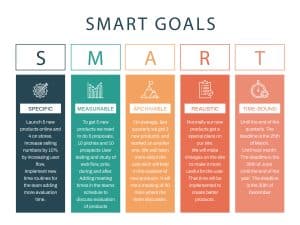
One of the most common reasons for procrastination is a lack of clarity regarding what needs to be done and when. Vague goals and ambiguous deadlines create a fertile ground for delay, as it’s hard to start something if you don’t fully understand its scope or urgency. Implementing SMART goals and establishing clear, firm deadlines provides the necessary structure to overcome this.
SMART is an acronym for Specific, Measurable, Achievable, Relevant, and Time-bound. By applying these criteria to your goals, you transform abstract aspirations into concrete, actionable steps. This clarity not only reduces the likelihood of procrastination but also increases your overall chances of success.
Defining Specific and Measurable Objectives
The first two components of SMART goals are about precision. A specific goal answers the ‘who, what, where, when, why, and how’ of a task, leaving no room for ambiguity. A measurable goal allows you to track progress and know when the goal has been achieved, providing crucial motivation.
- Specific: Instead of “improve writing,” aim for “write a 1000-word blog post on productivity strategies.”
- Measurable: How will you know when you’ve succeeded? “Complete 5 pages of the report” is measurable; “work on the report” is not.
Achievable, Relevant, and Time-bound Goals
The remaining SMART criteria ensure that your goals are realistic and contribute meaningfully to your broader objectives, all within a defined timeframe. This prevents setting yourself up for failure with impossible tasks or endlessly deferred projects.
- Achievable: Set goals that challenge you but are still within your capabilities. Overly ambitious goals can lead to discouragement and procrastination.
- Relevant: Ensure your goals align with your larger objectives and values. If a task doesn’t feel relevant, motivation will be low.
- Time-bound: Every goal needs a deadline. This creates urgency and prevents tasks from lingering indefinitely. Break larger projects into smaller, time-bound milestones.
By meticulously crafting SMART goals and adhering to well-defined deadlines, you create a roadmap for action. Each step becomes clear, its purpose understood, and its completion date fixed. This structured approach significantly reduces the mental overhead associated with starting and completing tasks, serving as a powerful deterrent against procrastination.
Strategy 5: Implementing Accountability and Rewards
Even with the best intentions and strategies, maintaining momentum can be challenging. This is where external accountability and a well-structured reward system come into play. Knowing that someone else is expecting progress or that a desirable reward awaits can be a powerful motivator to push past the urge to procrastinate.
Accountability can take many forms, from a dedicated study buddy to a public commitment. Rewards, when used strategically, reinforce positive behavior and make the often-unpleasant task of starting work more appealing. Together, these elements create a supportive framework that encourages consistent action.
Establishing Accountability Systems
Human beings are inherently social creatures, and the prospect of letting someone else down can be a stronger motivator than internal self-discipline alone. Leveraging this aspect of human nature can be incredibly effective in overcoming procrastination.
- Accountability Partner: Find a friend, colleague, or mentor with whom you regularly share your goals and progress. Schedule check-ins to discuss your achievements and challenges.
- Public Commitment: Announce your goals on social media, to your team, or to family members. The public nature of the commitment adds an extra layer of pressure to follow through.
- Productivity Groups: Join online or in-person groups focused on productivity where members support and hold each other accountable for their tasks.
Designing Effective Reward Systems
Rewards should be tailored to your preferences and proportional to the effort expended. They serve as positive reinforcement, making the act of completing tasks more enjoyable and creating a positive feedback loop that encourages future productivity. Avoid rewards that undermine your long-term goals.
- Small, Immediate Rewards: For completing a single task or a Pomodoro session, allow yourself a short, enjoyable break (e.g., listening to a favorite song, a quick walk).
- Medium-Term Rewards: For completing a significant milestone or a day’s worth of challenging work, consider a slightly larger reward, like watching an episode of a show or enjoying a special treat.
- Long-Term Rewards: For achieving major project goals, plan a more substantial reward, such as a weekend getaway, a new gadget, or a celebratory meal.
By strategically integrating accountability and rewards, you create a powerful external and internal motivational system. This dual approach helps to bridge the gap between intention and action, making it significantly easier to consistently overcome procrastination and stay on track with your goals.
Strategy 6: Optimizing Your Environment and Minimizing Distractions
Our physical and digital environments play a profound role in our ability to focus and avoid procrastination. A cluttered workspace, constant notifications, or an uncomfortable setting can all create barriers to productivity. Actively optimizing your environment to support focus and minimize distractions is a vital strategy for sustained output.
This isn’t just about tidiness; it’s about creating a dedicated space that signals to your brain that it’s time to work. By removing temptations and establishing clear boundaries, you reduce the mental effort required to stay on task, making it easier to start and complete work without succumbing to the pull of procrastination.
Creating a Productive Workspace

Your physical environment should be a sanctuary for productivity. This means designing a space that is conducive to concentration and free from unnecessary clutter that can divert your attention. Even small changes can have a significant impact on your ability to focus.
- Declutter: Remove anything from your desk that isn’t directly related to the task at hand. A clean space leads to a clear mind.
- Ergonomics: Ensure your chair, desk, and screen are set up ergonomically to prevent discomfort, which can be a subtle source of distraction.
- Lighting and Noise: Optimize for natural light whenever possible. Use noise-canceling headphones or ambient sound if your environment is noisy.
- Dedicated Zone: If possible, designate a specific area for work only. This helps establish a mental association between the space and productive activity.
Taming Digital Distractions
In the modern age, digital distractions are arguably the biggest culprits behind procrastination. The constant barrage of notifications, emails, and social media alerts can severely fragment our attention and make deep work nearly impossible. Proactive management of these digital interruptions is crucial.
- Turn Off Notifications: Disable all non-essential notifications on your phone and computer. This includes social media, news alerts, and even some email alerts.
- Use Website Blockers: Employ browser extensions or apps that block access to distracting websites during designated work periods.
- “Do Not Disturb” Mode: Utilize your device’s “Do Not Disturb” feature to silence calls and texts from everyone except essential contacts.
- Scheduled Digital Breaks: Instead of constantly checking devices, schedule specific times during your breaks to engage with social media or personal messages.
By consciously shaping both your physical and digital environments, you create a powerful barrier against the impulses that lead to procrastination. A well-optimized environment acts as a silent partner in your productivity journey, making it easier to dive into tasks and stay focused until they are complete.
Strategy 7: Practicing Self-Compassion and Mindfulness
While strategies for organization and external motivation are vital, internal approaches like self-compassion and mindfulness are equally critical in the long-term battle against procrastination. Often, the harsh self-criticism that follows a bout of procrastination only exacerbates the problem, creating a cycle of guilt and further delay. Cultivating self-compassion helps break this cycle.
Mindfulness, on the other hand, allows us to observe our urges to procrastinate without immediately acting on them. It provides a space for conscious choice, enabling us to respond to tasks strategically rather than reactively. These internal practices foster resilience and a healthier relationship with our work.
Embracing Self-Compassion
Instead of berating yourself for past procrastination, practice treating yourself with the same kindness and understanding you would offer a friend. This doesn’t mean excusing inaction, but rather acknowledging your struggles without judgment, which can paradoxically make it easier to move forward.
- Acknowledge Your Humanity: Recognize that procrastination is a common human experience. You are not alone in this struggle.
- Replace Self-Criticism with Encouragement: When you catch yourself procrastinating, instead of harsh words, offer yourself gentle encouragement to start small.
- Learn from Mistakes, Don’t Dwell: Analyze what led to the procrastination without judgment, and use that insight to refine your strategies for next time.
Leveraging Mindfulness to Stay Present
Mindfulness is the practice of being fully present in the moment, observing your thoughts and feelings without getting caught up in them. When applied to work, it helps you recognize the subtle cues that lead to procrastination and choose a different path.
- Observe the Urge: When you feel the pull to procrastinate, notice the sensation without immediately acting on it. Ask yourself what emotion or thought is driving that urge.
- Focus on One Task: Bring your full attention to the task at hand. If your mind wanders, gently guide it back to the present moment and the current action.
- Practice Mindful Breaks: During your short breaks, engage fully in the break activity. This helps to truly refresh your mind, rather than just shifting distractions.
By integrating self-compassion and mindfulness into your daily routine, you build a stronger internal foundation against procrastination. These practices help you to manage the emotional and cognitive aspects of delay, fostering a more positive and productive relationship with your tasks and goals. They are not quick fixes, but powerful tools for sustainable change.
| Strategy | Brief Description |
|---|---|
| Two-Minute Rule | Do any task taking under two minutes immediately to build momentum and clear small items. |
| Pomodoro Technique | Work in focused 25-minute intervals with short breaks to enhance concentration and prevent burnout. |
| “Done is Better Than Perfect” | Prioritize completing tasks over achieving unattainable perfection, allowing for iterative improvement. |
| SMART Goals & Deadlines | Set Specific, Measurable, Achievable, Relevant, Time-bound goals to provide clarity and urgency. |
Frequently Asked Questions About Procrastination
People primarily procrastinate due to complex psychological factors like fear of failure, perfectionism, lack of motivation, or feeling overwhelmed. It’s often an emotional regulation problem, where individuals prioritize short-term mood relief over long-term task completion, seeking immediate gratification from easier activities.
To start a difficult task, try the Two-Minute Rule: commit to working on it for just two minutes. Often, overcoming the initial inertia is the hardest part. Breaking the task into tiny, manageable steps can also make it less daunting, allowing you to build momentum gradually.
No, procrastination is not necessarily a sign of laziness. While it can appear that way, it’s more accurately described as a complex behavioral pattern often linked to emotional regulation, fear, anxiety, or perfectionism. Lazy individuals typically have no desire to complete tasks, whereas procrastinators often intend to but struggle to start.
Setting SMART goals (Specific, Measurable, Achievable, Relevant, Time-bound) reduces procrastination by providing clarity and structure. Vague goals foster delay. SMART goals define exactly what needs to be done, how success is measured, ensure feasibility, align with purpose, and establish clear deadlines, making tasks less intimidating and easier to start.
Self-compassion is crucial because harsh self-criticism after procrastinating often exacerbates the problem, leading to a cycle of guilt and further avoidance. By treating yourself with kindness and understanding, you reduce anxiety and foster a healthier mindset, making it easier to re-engage with tasks and learn from past delays without judgment.
Conclusion
Conquering procrastination is a journey, not a destination, requiring a blend of strategic techniques and a compassionate understanding of oneself. By implementing these 7 proven strategies to beat procrastination: 7 proven strategies to get things done now, you gain powerful tools to transform your approach to tasks and goals. From breaking down overwhelming projects and utilizing the Pomodoro Technique for focused work, to cultivating a “done is better than perfect” mindset and leveraging accountability, each strategy offers a practical pathway to immediate action. Remember to define SMART goals, optimize your environment, and practice self-compassion, as these internal and external adjustments build resilience and sustained productivity. Embrace these methods, and watch as you not only get more done but also cultivate a more peaceful and accomplished relationship with your daily responsibilities.