Eisenhower Matrix: Prioritize Tasks & Boost Output in 2026
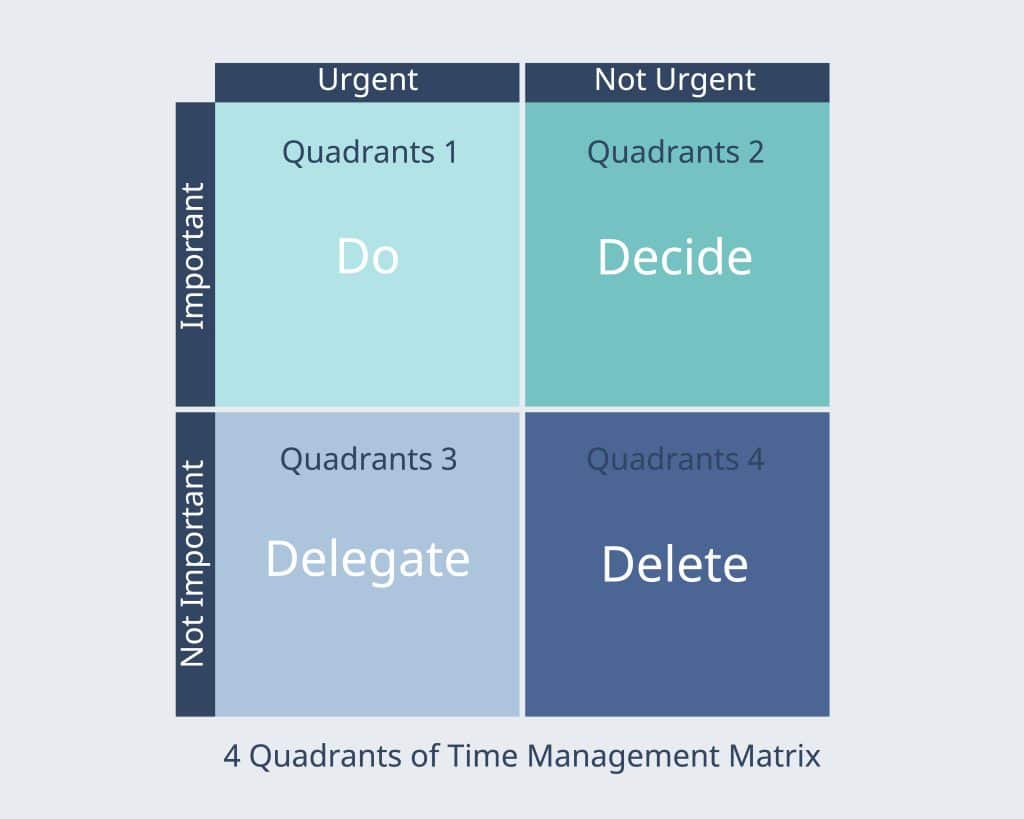
The Eisenhower Matrix is a powerful time management tool that helps you categorize tasks by urgency and importance, enabling you to focus on what truly matters and achieve maximum output in 2026.
Are you ready to transform your productivity and achieve your goals more efficiently in the coming year? In a world brimming with distractions, mastering task prioritization is no longer a luxury but a necessity. The Eisenhower Matrix: Prioritize Tasks and Maximize Your Output in 2026 offers a timeless yet incredibly relevant framework to cut through the noise and focus on what truly drives results.
Understanding the Eisenhower Matrix: A Foundation for 2026 Productivity
The Eisenhower Matrix, also known as the Urgent/Important Matrix, is a simple yet profoundly effective tool for prioritizing tasks and managing time. It was popularized by Stephen Covey in his book ‘The 7 Habits of Highly Effective People,’ building on a method attributed to former U.S. President Dwight D. Eisenhower. This matrix helps you categorize tasks into four quadrants based on their urgency and importance, providing a clear visual guide for decision-making regarding what to do, when to do it, and who should do it.
In an increasingly complex professional and personal landscape, understanding and applying this matrix can be the cornerstone of a highly productive year. It moves beyond simply listing tasks to strategically evaluating their impact and timing. This method is particularly relevant as we look towards 2026, a year that promises new challenges and opportunities, requiring sharp focus and efficient action.
The Genesis of a Powerful Prioritization Tool
Dwight D. Eisenhower, known for his ability to manage immense responsibilities, famously said, “I have two kinds of problems: the urgent and the important. The urgent are not important, and the important are never urgent.” While this might be an oversimplification, it encapsulates the core idea behind the matrix. It highlights the critical distinction between what demands immediate attention and what contributes to long-term goals.
- Urgent tasks: Require immediate attention, often due to external deadlines or unforeseen circumstances.
- Important tasks: Contribute to long-term goals, values, and mission, often having significant consequences if neglected.
- The trap of urgency: Many people spend too much time on urgent tasks, neglecting important ones that drive true progress.
By understanding the historical context and the philosophy behind the Eisenhower Matrix, users can appreciate its enduring relevance. It’s not just a fancy chart; it’s a strategic mindset shift that empowers individuals to take control of their schedules rather than being controlled by them. This foundational understanding sets the stage for applying the matrix effectively in 2026.
The matrix provides a structured way to evaluate every item on your to-do list, preventing the common pitfall of mistaking busyness for productivity. It encourages proactive planning over reactive problem-solving, a crucial skill for thriving in any environment. This initial dive into its principles lays the groundwork for practical application.
Quadrant 1: Urgent and Important – The “Do First” Zone
The first quadrant of the Eisenhower Matrix is dedicated to tasks that are both urgent and important. These are the crises, deadlines, and problems that demand your immediate attention. Think of these as the “firefighting” tasks that cannot be ignored and have significant consequences if delayed. Effectively managing this quadrant is crucial for maintaining control and preventing crises from spiraling.
While ideally, you want to minimize the number of tasks falling into this quadrant through proactive planning, some will inevitably arise. The key is to address them swiftly and decisively. These tasks are often high-pressure and time-sensitive, requiring your full focus and energy. They directly impact your core responsibilities and long-term objectives, making their immediate completion paramount.
Identifying True Crises and Deadlines
Distinguishing between genuinely urgent and important tasks and those that merely appear so is vital. True Quadrant 1 tasks are often characterized by:
- Imminent deadlines: Projects due today or tomorrow.
- Critical issues: Problems that halt progress or cause significant harm if not addressed immediately.
- Unforeseen emergencies: Unexpected events that require immediate resolution.
It’s easy to fall into the trap of perceiving everything as urgent and important, leading to constant stress and burnout. A critical step in mastering this quadrant is to develop a discerning eye for what truly belongs here. This often involves asking probing questions about the task’s actual deadline and its impact on your goals.
For example, a client crisis that could lead to contract termination is clearly Quadrant 1. However, an email that feels urgent but can wait a few hours might not be. The goal is to tackle these tasks with focus, ensuring they are resolved efficiently and effectively. Once handled, you can then shift your attention to other quadrants, ideally preventing future crises through better planning.
By efficiently handling Quadrant 1 tasks, you prevent them from consuming your entire workday and creating a perpetual state of emergency. This allows for a more strategic allocation of your time and resources to other, often more impactful, areas. Mastering this “do first” zone is fundamental for overall productivity in 2026.
Quadrant 2: Not Urgent but Important – The “Schedule” Zone
Quadrant 2 is often considered the most crucial quadrant for long-term success and personal growth. These tasks are important but not urgent, meaning they contribute significantly to your goals, personal development, and overall well-being, but they don’t have an immediate deadline forcing you to act. This is the realm of strategic planning, relationship building, and self-improvement.
Investing time in Quadrant 2 activities is what prevents future crises in Quadrant 1. It’s where you build your capabilities, strengthen your foundations, and proactively work towards your vision for 2026. Neglecting this quadrant leads to a life dominated by urgent, reactive tasks, leaving little room for meaningful progress.
Proactive Planning and Goal Achievement
The essence of Quadrant 2 lies in proactive scheduling. Since these tasks lack immediate pressure, they can easily be postponed indefinitely unless intentionally scheduled. Examples include:
- Strategic planning: Setting quarterly or annual goals, developing new projects.
- Relationship building: Networking, spending quality time with loved ones.
- Personal development: Learning new skills, exercising, reading.
- Prevention: Maintenance tasks, health check-ups, regular reviews.
To succeed in this quadrant, you must consciously allocate time for these activities. This means blocking out specific slots in your calendar for tasks like “project planning,” “skill development,” or “relationship maintenance.” Without dedicated time, these important but non-urgent items will be continually pushed aside by more pressing, but often less significant, demands.
Many successful individuals and organizations prioritize Quadrant 2. They understand that consistent, deliberate effort in this area yields substantial returns over time, reducing stress and increasing overall effectiveness. Making Quadrant 2 a priority in 2026 will be a game-changer for maximizing your output and achieving sustainable growth.
By dedicating sufficient time to Quadrant 2, you are essentially investing in your future. This approach shifts you from a reactive mindset to a proactive one, allowing you to shape your destiny rather than merely responding to external forces. This commitment to important, non-urgent tasks is a hallmark of truly effective individuals.
Quadrant 3: Urgent but Not Important – The “Delegate” Zone
Quadrant 3 tasks are those that demand immediate attention but do not contribute significantly to your personal or professional goals. These are often interruptions, minor requests, or activities that are urgent for someone else, but not for you. They can be deceptive because their urgency makes them feel important, but upon closer inspection, their impact on your core objectives is minimal.
The primary strategy for handling Quadrant 3 tasks is delegation. If a task is urgent but not important to your specific role or goals, it likely is important to someone else, or can be handled by someone with less specialized skills. Learning to identify and effectively delegate these tasks is paramount to protecting your time for Quadrants 1 and 2.

Mastering the Art of Delegation and Saying “No”
Delegation isn’t just about offloading work; it’s about empowering others and optimizing resource allocation. For 2026, consider:
- Identifying delegable tasks: Which emails, phone calls, or administrative tasks can others handle?
- Empowering your team: Provide clear instructions and necessary resources for successful delegation.
- Setting boundaries: Politely decline requests that fall into this quadrant if delegation isn’t an option.
Saying “no” to Quadrant 3 tasks can be challenging, especially in collaborative environments. However, it’s a critical skill for safeguarding your productivity. When you say “yes” to a Quadrant 3 task, you are inherently saying “no” to a Quadrant 1 or 2 task that truly matters. This trade-off often leads to feelings of being overwhelmed and ineffective.
Common examples of Quadrant 3 tasks include some emails, certain meetings that don’t directly involve your core contributions, or requests for help that others are perfectly capable of handling themselves. By systematically delegating or politely declining these, you free up valuable time and mental energy for high-impact work. This strategic approach to managing interruptions will significantly enhance your output for 2026.
Effective delegation requires trust and clear communication. It’s not about avoiding work, but about ensuring that the right person is doing the right task, thereby optimizing overall team or personal efficiency. This quadrant is a powerful reminder that not all urgent demands are worthy of your personal effort.
Quadrant 4: Not Urgent and Not Important – The “Eliminate” Zone
The fourth quadrant encompasses tasks that are neither urgent nor important. These are distractions, time-wasters, and activities that offer little to no value, either in the short term or long term. While seemingly harmless, consistently engaging in Quadrant 4 activities can significantly erode your productivity, mental clarity, and progress toward your goals.
The most effective strategy for Quadrant 4 tasks is elimination. These activities often provide temporary relief or entertainment but do not contribute to any meaningful objective. Identifying and consciously cutting these out of your routine is a powerful step towards maximizing your output in 2026.
Identifying and Eliminating Time Wasters
Quadrant 4 tasks are often habits that we fall into without much thought. Recognizing them is the first step towards elimination:
- Excessive social media browsing: Mindlessly scrolling feeds for extended periods.
- Unnecessary meetings: Attending gatherings where your presence isn’t critical.
- Procrastination activities: Engaging in low-value tasks to avoid important ones.
- Unproductive perfectionism: Spending too much time on details that don’t add significant value.
Eliminating these tasks isn’t always easy, as some might be ingrained habits or provide a temporary escape. However, the cumulative effect of these small time-wasters can be immense. For 2026, make a conscious effort to track your time for a week to identify where these unproductive hours are going. Once identified, develop strategies to minimize or completely cut them out.
For example, if you find yourself spending an hour each day mindlessly surfing the internet, consider blocking certain sites during work hours or setting a timer for quick breaks. The goal is not to eliminate all leisure, but to distinguish between conscious relaxation and unconscious time-wasting. By ruthlessly cutting out Quadrant 4 activities, you create more space for the tasks that truly matter.
This quadrant serves as a critical reminder that not all activities are created equal. Some simply drain your energy and time without offering any genuine return. A proactive approach to eliminating these non-value-adding tasks will be a significant factor in boosting your overall output and achieving clarity in the coming year.
Implementing the Eisenhower Matrix in Your Daily Routine for 2026
Understanding the theory behind the Eisenhower Matrix is one thing; consistently applying it in your daily life is another. For 2026, the goal is to integrate this powerful prioritization tool seamlessly into your routine, making it a natural part of how you approach tasks. This involves conscious effort, regular review, and a willingness to adapt your habits.
Start by making it a habit to categorize every new task or request that comes your way. Before diving in, take a moment to place it within the appropriate quadrant. This brief pause can prevent you from automatically reacting to urgency and instead encourage a more thoughtful, strategic response. Consistency is key to making this framework truly effective.
Practical Steps for Integration and Habit Formation
To successfully embed the Eisenhower Matrix into your 2026 workflow, consider these practical steps:
- Daily or weekly review: At the start of each day or week, list all your tasks and assign them to a quadrant.
- Visual aids: Use a physical whiteboard, a digital tool, or even a simple piece of paper divided into four sections.
- Time blocking: Schedule specific blocks of time for Quadrant 2 tasks to ensure they don’t get overlooked.
- Regular evaluation: Periodically reassess tasks; what was urgent might become important, and vice-versa.
For example, instead of just creating a long to-do list, create a “Matrix To-Do List” where each item is explicitly categorized. When you look at your list, you immediately know which tasks to “Do,” “Schedule,” “Delegate,” or “Eliminate.” This visual clarity reduces decision fatigue and streamlines your workflow, allowing you to focus on execution.
Embrace flexibility. While the matrix provides a rigid framework, real life is fluid. Be prepared to re-evaluate tasks as circumstances change. The power of the Eisenhower Matrix lies not just in categorization but in its ability to guide dynamic decision-making. Making this a daily practice will significantly enhance your ability to prioritize tasks and maximize your output in 2026.
Integrating the matrix transforms how you perceive and interact with your workload. It shifts your focus from merely completing tasks to completing the *right* tasks, fostering a sense of control and purpose. This systematic approach is an invaluable asset for anyone aiming for peak productivity.
Maximizing Your Output and Reducing Stress with the Matrix in 2026
The ultimate goal of applying the Eisenhower Matrix is not just to manage tasks but to maximize your output and significantly reduce stress. By consistently focusing on important tasks and skillfully managing urgent ones, you move from a reactive state of constant firefighting to a proactive state of strategic accomplishment. This shift is profound, impacting not only your work but also your overall well-being.
When you spend more time in Quadrant 2, you’re building a future where fewer tasks escalate into Quadrant 1 crises. This proactive approach means less last-minute panic, more thoughtful execution, and ultimately, higher quality results. It’s about working smarter, not just harder, and achieving a sustainable pace of productivity throughout 2026.
Long-Term Benefits and Sustainable Productivity

The consistent application of the Eisenhower Matrix yields several tangible benefits:
- Increased focus: By eliminating distractions, you can dedicate your energy to high-impact work.
- Reduced stress: Proactive planning and crisis prevention lead to a calmer, more controlled environment.
- Improved decision-making: A clear framework helps you make better choices about where to invest your time.
- Enhanced goal achievement: Consistent effort on important tasks drives you closer to your long-term objectives.
For 2026, consider how this matrix can transform not just your individual output but also team dynamics. Encouraging your team to adopt this framework can lead to more efficient collaboration, clearer roles, and a shared understanding of priorities. It fosters an environment where everyone is contributing to what truly matters, minimizing wasted effort.
The ability to differentiate between urgent and important is a hallmark of effective leadership and personal mastery. By internalizing this distinction, you gain control over your schedule and, by extension, your life. The Eisenhower Matrix is more than a productivity hack it’s a philosophy for achieving sustainable success and well-being.
Ultimately, maximizing output isn’t about doing more, but about doing what’s most impactful. The matrix guides you to this critical understanding, ensuring that your efforts are aligned with your most significant goals. This strategic alignment is the cornerstone of a highly productive and less stressful 2026.
| Quadrant | Action Strategy |
|---|---|
| Urgent & Important | Do First: Tackle crises and critical deadlines immediately. |
| Not Urgent & Important | Schedule: Plan for strategic goals, personal growth, and prevention. |
| Urgent & Not Important | Delegate: Assign to others or handle quickly if unavoidable. |
| Not Urgent & Not Important | Eliminate: Avoid or minimize time-wasting distractions. |
Frequently Asked Questions About the Eisenhower Matrix
The primary benefit is enhanced clarity and focus on high-impact tasks, reducing time spent on distractions. It helps you strategically allocate your energy, leading to greater productivity, reduced stress, and significant progress towards your long-term goals throughout the year.
Ideally, you should review and categorize your tasks daily or at least weekly. A quick daily check helps you stay on track, while a weekly review allows for broader strategic planning and adjustment, ensuring your efforts remain aligned with your overarching objectives for 2026.
Absolutely. The Eisenhower Matrix is highly versatile and can be applied to both professional and personal tasks. It helps prioritize everything from career development and project deadlines to personal health goals, family commitments, and leisure activities, creating a balanced and productive life in 2026.
If this happens frequently, it indicates a need for more proactive planning and delegation. Focus on dedicating more time to ‘Not Urgent and Important’ tasks (Quadrant 2) to prevent future crises. Also, evaluate if you can delegate more ‘Urgent but Not Important’ tasks to free up your schedule.
Yes, many productivity tools and apps can be adapted. Simple options include Trello, Asana, or even a spreadsheet. Some dedicated apps like Eisenhower Matrix or Focus Matrix are designed specifically for this framework, offering intuitive interfaces to categorize and manage your tasks effectively in 2026.
Conclusion
As we navigate the complexities of 2026, the Eisenhower Matrix stands out as an indispensable tool for anyone seeking to master their time and maximize their output. By providing a clear, actionable framework for distinguishing between what’s urgent and what’s truly important, it empowers individuals to take control of their schedules, reduce stress, and consistently work towards their most significant goals. Embracing this powerful prioritization method will not only transform your productivity but also foster a greater sense of purpose and accomplishment in every aspect of your life.