Upgrade Home Security: 3 Smart Devices for Next Spring
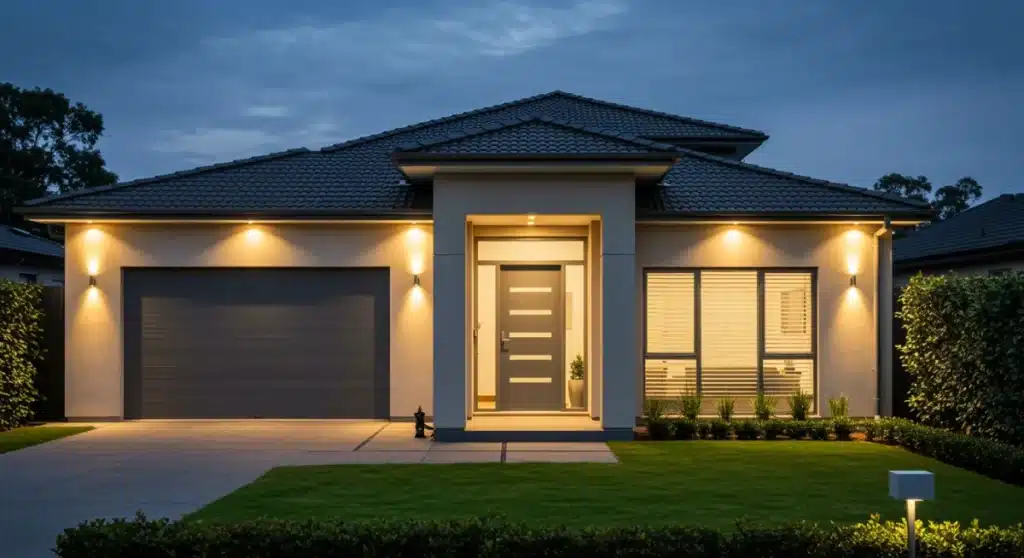
By next spring, elevate your home’s security and comfort with cutting-edge smart devices, offering unparalleled protection and seamless integration into your daily life for ultimate peace of mind.
As the seasons change and we look ahead to warmer days, now is the perfect time to consider how to upgrade home security for enhanced comfort and peace of mind by next spring. Modern technology offers innovative solutions that not only protect your property but also integrate seamlessly into your lifestyle, providing convenience and control at your fingertips.
The evolving landscape of home security
Home security has transformed dramatically over the past decade, moving beyond simple alarms to sophisticated, interconnected systems. Today’s smart security devices offer proactive protection, real-time monitoring, and remote access, giving homeowners unprecedented control over their property’s safety.
The integration of artificial intelligence (AI) and machine learning (ML) has made these systems even more intelligent, capable of distinguishing between legitimate visitors and potential threats, reducing false alarms, and learning your daily routines to optimize security protocols. This shift means security is no longer just about reacting to incidents but preventing them.
Beyond traditional alarms: what smart security offers
Traditional alarm systems primarily serve as deterrents and notify authorities after an intrusion. While still valuable, they lack the interactive and preventive capabilities of smart devices. Smart security, on the other hand, provides a holistic approach to home protection.
- Remote monitoring: Check on your home from anywhere, anytime, using a smartphone or tablet.
- Real-time alerts: Receive instant notifications for unusual activity, motion detection, or entry attempts.
- Integration with other smart devices: Create a cohesive smart home ecosystem where security devices communicate with lighting, thermostats, and entertainment systems.
- Customizable settings: Tailor security protocols to fit your specific needs and schedule, adapting to your lifestyle.
The modern homeowner seeks not just protection but also convenience and peace of mind. Smart security delivers on all fronts, making it an essential component of any contemporary living space. Understanding these advancements is the first step towards making an informed decision about upgrading your home’s defenses.
Smart video doorbells: your virtual doorman
One of the most popular and effective smart security devices is the video doorbell. These innovative gadgets offer far more than just announcing visitors; they provide a comprehensive view of your entryway, enhancing both convenience and security. Imagine being able to see and speak to anyone at your door, whether you’re home or thousands of miles away.
Smart video doorbells typically feature high-definition cameras, two-way audio, motion detection, and night vision, ensuring you never miss a beat. They connect to your home Wi-Fi and send alerts directly to your smartphone when someone approaches or rings the bell. This immediate notification system allows for quick responses to deliveries, unexpected guests, or suspicious activity.
Key features and benefits of video doorbells
The functionality of smart video doorbells extends beyond simple surveillance. Their advanced features contribute significantly to overall home security and daily convenience.
- Motion detection zones: Customize areas where you want to be alerted to motion, reducing notifications from passing cars or pedestrians.
- Cloud storage: Most video doorbells offer cloud storage for recorded footage, allowing you to review events later and share them with authorities if needed.
- Integration with smart locks: Some models can be integrated with smart locks, enabling you to unlock your door remotely for trusted visitors or deliveries.
- Package detection: Advanced doorbells can even notify you when a package has been delivered and left at your doorstep, helping to prevent theft.
The ability to screen visitors without opening the door adds an invaluable layer of safety. For instance, if a stranger approaches, you can communicate with them through the doorbell’s speaker, giving the impression that you are home even when you’re not. This simple act can deter potential intruders.
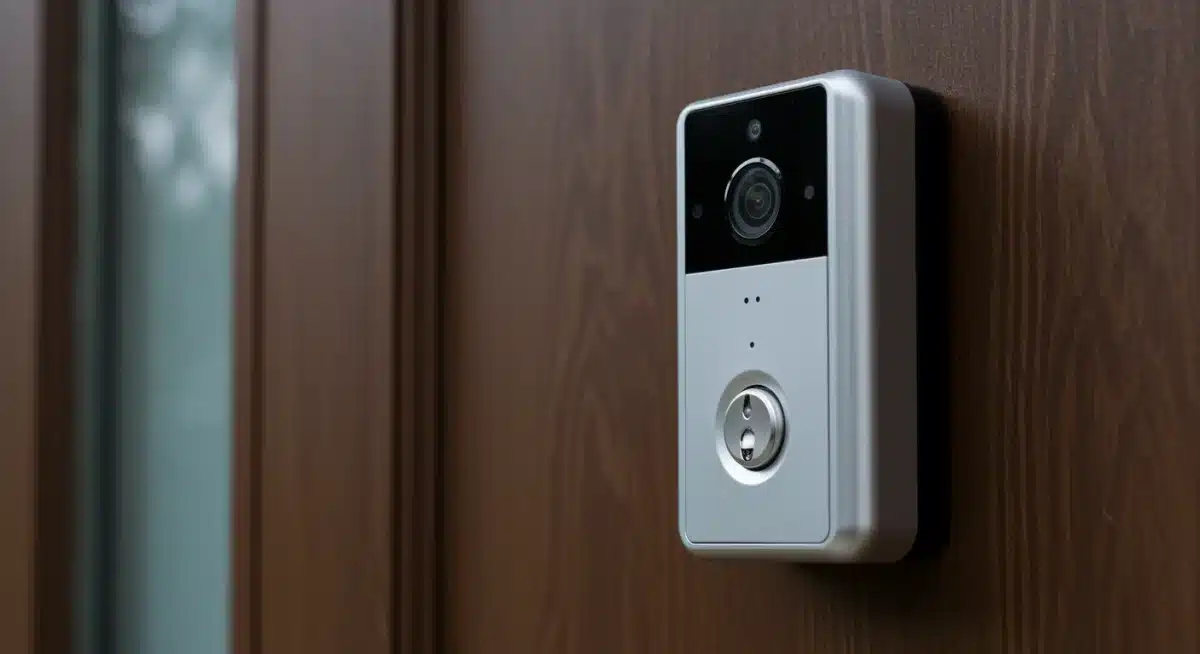
Choosing a video doorbell involves considering factors like camera resolution, field of view, battery life (for wireless models), and subscription costs for cloud storage. Popular brands offer a range of options to suit different budgets and needs, making this a highly accessible upgrade for almost any home.
Advanced smart security cameras: inside and out
Beyond the front door, smart security cameras provide comprehensive surveillance for both the interior and exterior of your home. These cameras come in various forms, from discrete indoor models to rugged outdoor units, all designed to offer detailed monitoring and peace of mind. The versatility of these cameras allows for a tailored security setup that addresses specific vulnerabilities around your property.
Outdoor cameras are built to withstand the elements and often feature higher resolution, wider fields of view, and powerful night vision. They can be strategically placed to cover driveways, backyards, and vulnerable access points. Many outdoor cameras also include spotlights or sirens that can be activated remotely or automatically when motion is detected, acting as powerful deterrents.
Indoor cameras for comprehensive monitoring
Indoor smart cameras serve multiple purposes, from monitoring pets and children to detecting intruders. Their features often include pan and tilt capabilities, two-way audio, and privacy modes that can temporarily disable recording when you’re home. Some advanced models even incorporate facial recognition technology to identify familiar faces and alert you to strangers.
- Activity zones: Define specific areas within the camera’s view that you want to monitor for activity, preventing unnecessary alerts.
- Pet monitoring: Keep an eye on your furry friends, speak to them through two-way audio, and even dispense treats with certain models.
- Nanny cam functionality: Ensure the safety and well-being of your children with live feeds and recorded footage.
- Integration with professional monitoring: Connect your cameras to a professional monitoring service for 24/7 surveillance and emergency response.
The strategic placement of both indoor and outdoor cameras creates a robust security perimeter. For example, an outdoor camera covering the garage entrance combined with an indoor camera monitoring the living room provides extensive coverage. The ability to access live feeds and recorded video through a single app streamlines the monitoring process, making it easy to stay informed about your home’s status.
When selecting smart cameras, consider factors such as video quality (1080p, 2K, 4K), storage options (local vs. cloud), power source (wired, battery, solar), and integration capabilities with your existing smart home ecosystem. Investing in high-quality cameras is a crucial step in fortifying your home’s security.
Smart lighting and motion sensors: proactive deterrence
Smart lighting and motion sensors are often overlooked components of a comprehensive home security system, yet they play a crucial role in proactive deterrence. The simple act of illuminating an area or triggering a light when motion is detected can be incredibly effective at scaring away potential intruders, making your home appear occupied and less vulnerable.
Smart lights can be programmed to turn on and off at specific times, mimicking your presence even when you’re away. This ‘occupancy simulation’ feature is a powerful tool against burglaries. Furthermore, these lights can be integrated with motion sensors, automatically brightening an area when movement is detected, startling anyone who shouldn’t be there.
Integrating smart lighting for enhanced security
The true power of smart lighting for security comes from its ability to integrate with other smart devices and systems. This creates a layered defense that is both intelligent and responsive.
- Motion-activated lighting: Connect outdoor motion sensors to smart floodlights or pathway lights to illuminate intruders.
- Scheduled lighting: Program indoor and outdoor lights to turn on and off randomly or at specific times to simulate occupancy.
- Integration with security cameras: When a security camera detects motion, it can trigger nearby smart lights to turn on, providing better visibility for the camera and acting as an additional deterrent.
- Voice control: Use voice commands to quickly activate all lights in an emergency, creating a sense of activity and drawing attention.
Beyond security, smart lighting also adds convenience and comfort to your home. Adjusting brightness and color temperature, creating ambiance, and controlling lights remotely are all benefits that enhance daily living. The dual functionality of smart lighting—security and convenience—makes it an excellent investment for any homeowner.
When choosing smart lighting, look for compatibility with your preferred smart home platform (e.g., Apple HomeKit, Google Home, Amazon Alexa), ease of installation, and energy efficiency. Many smart bulbs and fixtures are LED-based, offering long lifespan and reduced energy consumption.
Smart locks and access control: keyless convenience and security
The traditional lock and key system, while still prevalent, has its limitations. Keys can be lost, stolen, or duplicated, posing significant security risks. Smart locks offer a modern solution, providing keyless convenience, enhanced control over access, and real-time monitoring of who enters and exits your home. These devices are a cornerstone of a truly intelligent home security setup.
Smart locks typically integrate with your smartphone, allowing you to lock and unlock your doors remotely. They often come with various entry methods, including keypads for code entry, fingerprint scanners, and even proximity unlocking. This flexibility means you no longer have to worry about carrying keys or hiding a spare under the doormat.
Advanced features for peace of mind
The benefits of smart locks extend beyond simply opening and closing doors. Their advanced features provide a robust layer of security and convenience.
- Virtual keys: Grant temporary or permanent access to family, friends, or service providers with unique digital keys that can be revoked at any time.
- Activity logs: Track who enters and exits your home, and at what time, providing a detailed record of access.
- Auto-lock functionality: Program your lock to automatically engage after a set period, ensuring your door is never accidentally left unlocked.
- Tamper alerts: Receive notifications if someone attempts to tamper with your lock, adding an extra layer of protection.
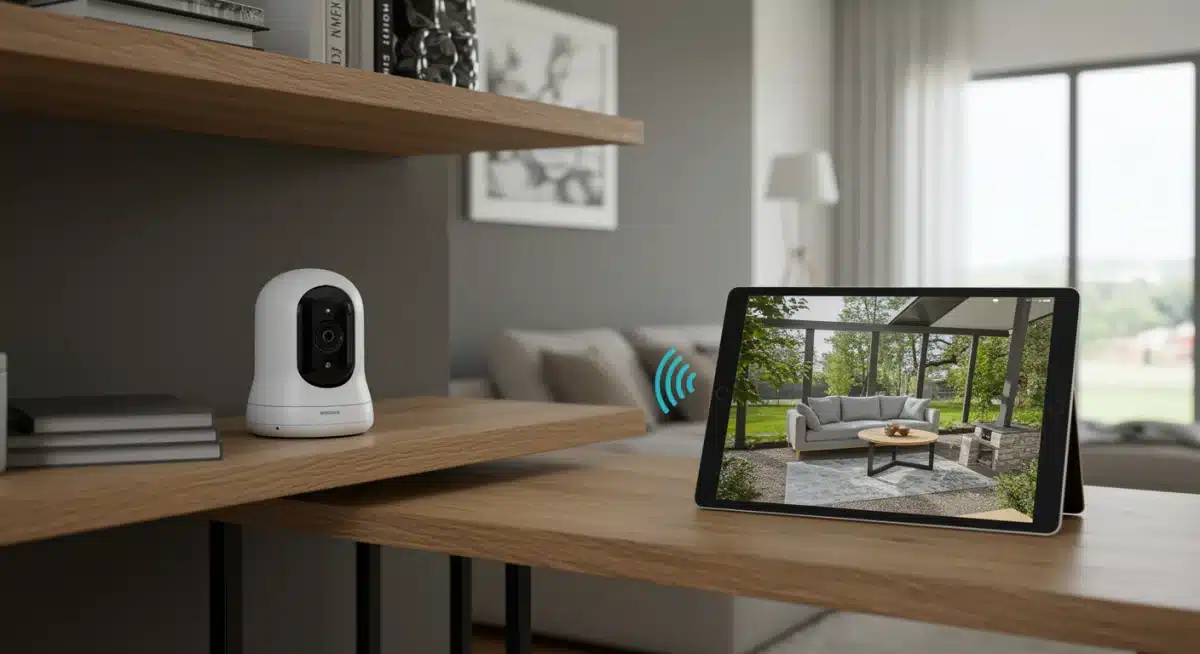
For instance, if you have a dog walker or a cleaning service, you can issue them a unique code that only works during specific hours on certain days. This level of control is impossible with traditional keys. Furthermore, if you’re away on vacation, you can monitor all entry and exit activity, ensuring your home remains secure.
When selecting a smart lock, consider its compatibility with your existing door hardware, battery life, security certifications, and integration with your smart home hub. Brands like August, Yale, and Schlage offer reliable and feature-rich options that can significantly upgrade your home’s access control and security posture.
Integrating smart devices for a cohesive security ecosystem
The true power of smart home security lies not in individual devices but in their seamless integration into a cohesive ecosystem. When smart video doorbells, cameras, lighting, motion sensors, and locks work together, they create a comprehensive and intelligent defense system that offers unparalleled protection and convenience. This interconnectedness allows for automated responses and a unified control experience.
Imagine a scenario where a motion sensor detects unusual activity in your backyard. This triggers your outdoor smart lights to turn on, illuminates the area for your smart security camera to get a clearer view, and sends an immediate alert to your phone. If the camera identifies an unknown person, your smart lock can automatically engage, and your indoor lights might flash to draw attention. This level of automation significantly enhances response times and deterrence.
Building your smart home security network
Creating a cohesive security ecosystem involves careful planning and selection of compatible devices. Most smart home platforms (e.g., Google Home, Amazon Alexa, Apple HomeKit, Samsung SmartThings) act as central hubs, allowing various devices from different manufacturers to communicate and interact.
- Choose a central hub: Select a smart home hub or platform that supports a wide range of devices and offers robust automation capabilities.
- Ensure compatibility: Verify that all your chosen smart security devices are compatible with your central hub and with each other.
- Create automation routines: Set up rules and routines (e.g., ‘if motion detected at front door, then turn on porch light and record video’) to automate security responses.
- Regularly update firmware: Keep all your smart devices’ firmware updated to ensure optimal performance, security, and access to new features.
A unified app for managing all your security devices is also crucial for a streamlined experience. This allows you to monitor live feeds, review alerts, adjust settings, and control various aspects of your security system from a single interface. The goal is to create a system that is easy to manage, highly responsive, and provides complete peace of mind.
By investing in a well-integrated smart security ecosystem, you’re not just buying individual gadgets; you’re building a smarter, safer, and more comfortable home for the future. This holistic approach ensures that every component works in harmony to protect your property and loved ones effectively.
Preparing for next spring: installation and setup tips
As you plan to upgrade your home security by next spring, proper installation and setup are crucial for maximizing the effectiveness of your new smart devices. While many smart security gadgets are designed for DIY installation, understanding some key tips can save you time, frustration, and ensure optimal performance.
Before you even unbox your devices, take the time to read the manuals thoroughly. Each device might have specific requirements regarding Wi-Fi connectivity, power sources, and mounting locations. Mapping out your home’s Wi-Fi dead zones and ensuring strong signal strength where devices will be placed is a critical first step. Consider investing in a mesh Wi-Fi system if your home has large areas with weak signals.
Essential tips for a smooth setup
A well-planned installation can make all the difference in how effectively your smart security system functions.
- Plan camera placement: Identify vulnerable entry points, areas with high foot traffic, and blind spots. Ensure cameras have a clear line of sight and are positioned to avoid glare.
- Test Wi-Fi signal: Before final installation, test the Wi-Fi signal strength at each device’s intended location. A weak signal can lead to dropped connections and missed alerts.
- Secure power sources: For wired devices, ensure a stable power supply. For battery-powered devices, check battery levels regularly and have replacements ready.
- Configure privacy settings: Set up privacy zones for cameras to exclude areas you don’t want to monitor, such as a neighbor’s yard.
- Create strong passwords: Use unique, complex passwords for all your smart devices and your Wi-Fi network to prevent unauthorized access.
Many smart devices come with user-friendly apps that guide you through the setup process step-by-step. Leverage these apps to customize settings, set up automation rules, and integrate devices with your smart home hub. Don’t rush through the initial configuration; taking your time to calibrate motion sensitivity, define activity zones, and test alerts will ensure your system works exactly as intended.
Finally, once everything is installed and configured, conduct a full system test. Trigger motion sensors, ring the doorbell, and lock/unlock smart locks to confirm that all alerts are received and all automations function correctly. This proactive approach ensures your home is truly secured and ready for the peace of mind that smart technology offers.
| Key Security Upgrade | Brief Description |
|---|---|
| Smart Video Doorbells | See, hear, and speak to visitors from anywhere, with motion detection and real-time alerts for your entryway. |
| Advanced Security Cameras | Monitor indoor and outdoor areas with HD video, night vision, and smart alerts for comprehensive surveillance. |
| Smart Lighting & Sensors | Deter intruders with motion-activated lights and occupancy simulation, enhancing visibility and security. |
| Smart Locks & Access | Keyless entry, remote control, activity logs, and virtual keys for enhanced door security and convenience. |
Frequently asked questions about smart home security
Smart security devices offer peace of mind by providing real-time monitoring, remote access, and instant alerts. You can check on your home from anywhere, receive notifications for unusual activity, and even communicate with visitors, ensuring you’re always connected and informed about your home’s safety.
Many smart security devices are designed for DIY installation, with user-friendly apps and clear instructions. While some advanced systems might benefit from professional setup, most common devices like video doorbells and cameras can be installed with basic tools and a good Wi-Fi connection, making them accessible to most homeowners.
Integrating multiple smart security devices creates a cohesive ecosystem that enhances overall protection and automation. Devices can communicate with each other, triggering actions like lights turning on when motion is detected, or locks engaging if an alarm sounds, providing a layered and more responsive defense system.
Many smart security devices offer optional monthly subscriptions, primarily for cloud storage of video footage, advanced features, or professional monitoring services. While some basic functionalities might be free, subscriptions often unlock the full potential of the device, providing extended recording history and enhanced support.
Smart lighting contributes significantly to home security by deterring intruders. Motion-activated lights can startle unwelcome visitors, while scheduled lighting can simulate occupancy when you’re away. Integrating smart lights with cameras and sensors creates a proactive defense that makes your home less appealing to potential threats.
Conclusion
As we anticipate the arrival of next spring, the opportunity to truly upgrade home security with smart devices presents itself as a wise investment in both safety and lifestyle. The evolution of home security technology has ushered in an era where protection is not just reactive but proactive, intelligent, and seamlessly integrated into our daily routines. From the vigilant eyes of smart video doorbells and cameras to the deterrent power of intelligent lighting and the convenience of smart locks, each device plays a pivotal role in creating a fortified and comfortable living environment. By embracing these innovations, homeowners can enjoy unparalleled peace of mind, knowing their property and loved ones are safeguarded by cutting-edge technology, making their homes smarter, safer, and more secure for the future.