Stop Multitasking: Boost Productivity by 40% with Focused Work

Implementing focused work sessions dramatically enhances productivity, allowing individuals to complete tasks more efficiently and effectively by eliminating the distractions inherent in multitasking.
In today’s fast-paced world, the allure of juggling multiple tasks simultaneously is strong, promising efficiency and greater output. However, research consistently shows that trying to do too many things at once often backfires, leading to diminished quality and slower progress. This article delves into why you should stop multitasking: how focused work sessions can increase productivity by 40%, offering a transformative approach to your daily tasks.
The illusion of multitasking: why it fails us
Multitasking, often lauded as a badge of honor in the modern workplace, is in reality a myth. Our brains are not designed to perform multiple complex tasks simultaneously. Instead, what we perceive as multitasking is rapid task-switching, a process that comes with significant cognitive costs. This constant shifting between activities drains mental energy and reduces our ability to concentrate deeply on any single task.
When you switch from one task to another, your brain doesn’t just seamlessly transition. It has to reorient itself, recall relevant information for the new task, and then refocus. This reorientation process, known as a ‘switch cost,’ is surprisingly time-consuming and energy-intensive. It’s like trying to drive a car with a manual transmission, constantly shifting gears for every minor adjustment instead of staying in a consistent, efficient gear.
Cognitive load and error rates
The cumulative effect of these switch costs is a higher cognitive load, meaning your brain is working harder to achieve less. This increased mental effort doesn’t translate into better performance; rather, it often leads to more mistakes and a lower quality of work. Think about editing an important document while also responding to emails and texts. Each interruption pulls your attention away, making it easier to miss errors or overlook critical details. Studies have shown that multitasking can increase error rates by up to 50% in certain tasks.
- Reduced attention span and focus.
- Increased stress and mental fatigue.
- Higher likelihood of making mistakes.
- Decreased ability to retain new information.
Understanding the true cost of multitasking is the first step towards embracing a more effective approach. By recognizing that our brains are not built for constant task-switching, we can begin to appreciate the power of dedicated, focused attention. This realization paves the way for adopting strategies that align with our natural cognitive architecture, ultimately leading to greater efficiency and job satisfaction.
In conclusion, the belief that multitasking makes us more productive is a widespread misconception. It fragments our attention, increases our mental workload, and ultimately undermines the quality and speed of our work. Moving away from this habit means embracing a more deliberate and mindful approach to our daily responsibilities, setting the stage for truly impactful work.
Defining focused work sessions: a path to deep productivity
Focused work sessions are dedicated blocks of time, typically without interruption, where an individual concentrates on a single task or a closely related set of tasks. This approach is rooted in the concept of ‘deep work,’ a term coined by Cal Newport, which refers to professional activities performed in a state of distraction-free concentration that push your cognitive capabilities to their limit. These efforts create new value, improve your skill, and are hard to replicate.
The essence of focused work is intentionality. It’s about consciously deciding what you will work on, for how long, and creating an environment that supports uninterrupted concentration. This isn’t just about avoiding distractions; it’s about actively cultivating a state of flow where your mind is fully engaged with the task at hand, leading to higher quality output and a deeper sense of accomplishment.
Key characteristics of effective focused sessions
Several elements contribute to the success of focused work sessions. These include setting clear goals, eliminating distractions, and managing your energy levels. Without these components, even the best intentions can falter, leading to fragmented attention and reduced efficacy. It’s a holistic approach that considers both the external environment and internal mental state.
- Single-task orientation: Dedicate the entire session to one primary task.
- Time blocking: Schedule specific, uninterrupted periods for deep work.
- Distraction elimination: Turn off notifications, close irrelevant tabs, inform colleagues.
- Clear objectives: Know exactly what you aim to achieve during the session.
By integrating these practices, individuals can transform their work habits from reactive to proactive, gaining greater control over their time and attention. The shift from constant reactivity to deliberate focus not only boosts productivity but also enhances job satisfaction by allowing for meaningful engagement with tasks. It moves us away from simply ‘getting things done’ to ‘getting the right things done, exceptionally well.’
Ultimately, focused work sessions are more than just a technique; they are a philosophy that prioritizes quality over quantity, depth over breadth, and intentionality over impulsivity. By adopting this mindset, we unlock our potential for significant achievements and cultivate a more fulfilling professional life.
The science behind the 40% productivity boost
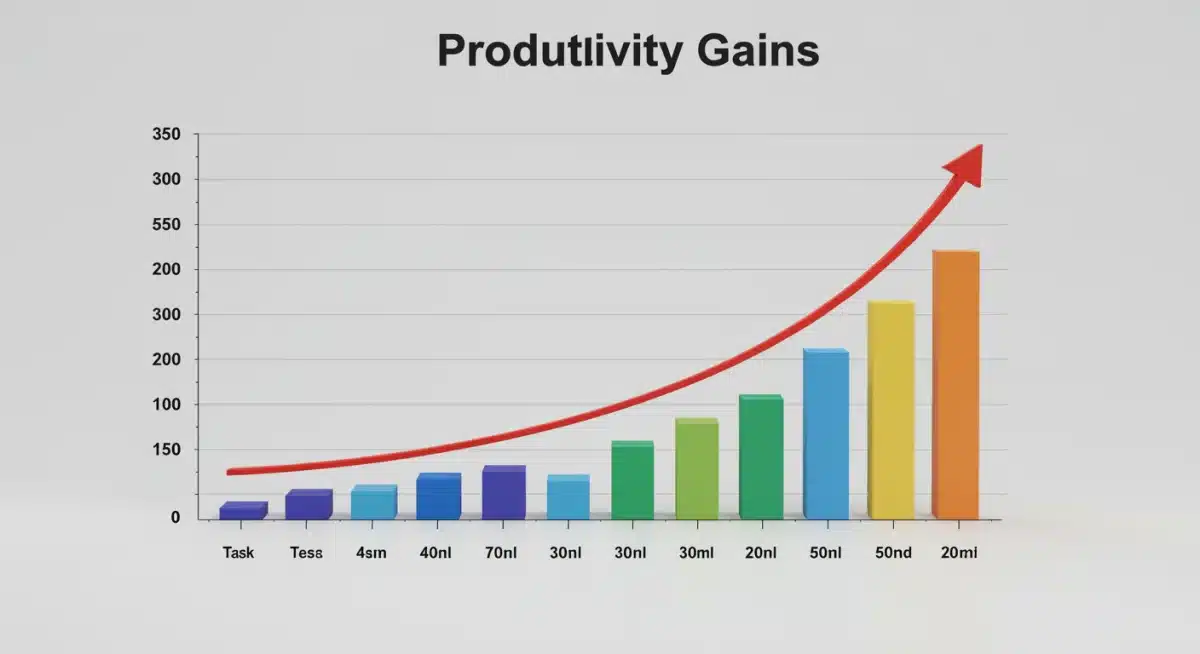
The claim that focused work can increase productivity by 40% isn’t merely anecdotal; it’s supported by psychological and neurological research. When we engage in focused work, our brains operate more efficiently, making better use of cognitive resources. This efficiency translates directly into faster task completion, fewer errors, and higher-quality outcomes. The human brain, after all, is a powerful instrument, but it performs best when given a clear, singular objective.
One of the primary mechanisms at play is the reduction of ‘attention residue.’ This phenomenon occurs when, after switching from task A to task B, your attention is still partially lingering on task A. This residue impairs your performance on task B, as your cognitive resources are divided. Focused work sessions, by minimizing task-switching, effectively eliminate attention residue, allowing your full cognitive capacity to be dedicated to the current task.
Neurological benefits of deep concentration
From a neurological perspective, deep concentration strengthens neural pathways associated with the task being performed. This is similar to how physical exercise strengthens muscles. The more you focus intensely on a particular skill or problem, the more efficient your brain becomes at handling similar tasks in the future. This leads to a compounding effect, where initial gains in productivity become even greater over time as your brain adapts to deep work.
- Enhanced neural pathway development.
- Improved problem-solving abilities.
- Greater capacity for complex thought.
- Increased mental endurance.
Furthermore, focused work reduces the stress response often associated with multitasking. The constant pressure of managing multiple incoming demands can elevate cortisol levels, leading to chronic stress and burnout. By creating a controlled environment where distractions are minimized, focused work promotes a calmer, more deliberate approach, which is beneficial for both mental health and sustained productivity.
In essence, the 40% productivity increase stems from a combination of reduced cognitive overhead, stronger neural connections, and a healthier mental state. It’s a testament to the brain’s remarkable capacity for efficiency when given the right conditions. Embracing focused work is not just about doing more; it’s about doing better, with less mental strain, and achieving results that truly matter.
Practical strategies for implementing focused work
Transitioning from a multitasking mindset to one of focused work requires intentional effort and the adoption of specific strategies. It’s not about simply wishing for more focus; it’s about actively designing your environment and routines to support deep concentration. The good news is that these strategies are highly adaptable and can be tailored to fit various work styles and environments.
The first step is often the most challenging: recognizing and eliminating your personal distraction triggers. For some, it might be social media notifications; for others, it could be email alerts or impromptu conversations. Identifying these culprits is crucial because you cannot manage what you do not acknowledge. Once identified, you can implement proactive measures to neutralize their impact during your dedicated work sessions.
Setting up your environment for deep work
Your physical and digital environments play a significant role in your ability to maintain focus. A clutter-free workspace, both physical and digital, can significantly reduce cognitive load and potential distractions. Consider dedicating a specific area for deep work, if possible, signaling to your brain that this space is for serious concentration.
- Designate a quiet zone: Find a place with minimal interruptions.
- Clear digital clutter: Close unnecessary tabs and applications.
- Use noise-canceling tools: Headphones can create a personal bubble of quiet.
- Inform colleagues/family: Set boundaries regarding availability during focused times.
Beyond the environment, scheduling is paramount. Implementing time-blocking techniques, where you allocate specific blocks of time to specific tasks, can be incredibly effective. Tools like the Pomodoro Technique, which involves working for 25 minutes followed by a short break, can help train your brain to sustain focus for defined periods. Experiment with different durations to find what works best for your attention span and the nature of your tasks.
Remember, building new habits takes time and consistency. Don’t get discouraged if your first few attempts at focused work aren’t perfect. Each session is an opportunity to learn and refine your approach. Over time, these dedicated blocks of concentration will become second nature, transforming your productivity and overall work experience.
Overcoming common obstacles to sustained focus
Despite the clear benefits, maintaining sustained focus can be challenging in a world brimming with distractions. Recognizing and proactively addressing these common obstacles is key to successfully integrating focused work sessions into your routine. It’s not just about willpower; it’s about building a system that supports your intentions.
One of the most pervasive obstacles is the constant barrage of digital notifications. Our devices are designed to capture and hold our attention, often at the expense of our deep work. The fear of missing out (FOMO) or the perceived urgency of responding immediately can make it difficult to disengage from our screens. Developing a disciplined approach to managing notifications is therefore essential.
Strategies for distraction management
To truly embrace focused work, you need a robust strategy for managing both internal and external distractions. Internal distractions might include wandering thoughts or a sudden urge to check social media, while external ones are interruptions from colleagues, emails, or phone calls. A multi-pronged approach is often most effective.
- Turn off all notifications: Silence phone, email, and social media alerts.
- Use website blockers: Temporarily block distracting sites during work sessions.
- Schedule communication: Designate specific times for checking emails and messages.
- Practice mindfulness: Gently redirect wandering thoughts back to the task.

Another significant hurdle is the initial discomfort of deep concentration. Our brains are accustomed to constant novelty and stimulation, so settling into a single, demanding task can feel unnatural at first. It requires mental stamina, which, like physical stamina, needs to be built up over time. Start with shorter focused sessions and gradually increase their duration as your capacity for concentration grows.
Finally, the challenge of setting realistic expectations is crucial. You won’t achieve perfect focus every single time, and that’s okay. The goal is progress, not perfection. Celebrate small victories and learn from setbacks. By systematically addressing these common obstacles, you can cultivate a resilient ability to focus, transforming your work habits and significantly boosting your productivity.
Integrating focused work into your daily routine
Making focused work a consistent part of your daily routine is where the real, sustainable productivity gains happen. It’s not enough to try it once; the benefits accrue through regular practice. This integration involves strategic planning, habit formation, and a willingness to adapt your approach based on what works best for you.
Start by identifying your ‘peak performance’ times. Are you a morning person who thrives on deep work before lunch, or do you find your focus sharpening in the afternoon? Schedule your most cognitively demanding tasks during these periods. This aligns your work with your natural energy cycles, making focused sessions more effective and less draining.
Building a focused work habit
Habit formation is a powerful tool for consistency. Begin by creating a clear trigger for your focused work sessions. This could be a specific time of day, a particular ritual (like brewing a cup of tea), or even putting on your noise-canceling headphones. Over time, your brain will associate this trigger with the act of deep work, making it easier to slip into a state of concentration.
- Identify peak focus times: Schedule demanding tasks during these periods.
- Establish pre-work rituals: Create a consistent routine before starting a session.
- Review and adapt: Regularly assess what worked and what didn’t in your sessions.
- Prioritize ruthlessly: Ensure you’re focusing on the most impactful tasks.
Don’t forget the importance of breaks. Focused work is intense, and our brains need time to recharge. Short, intentional breaks (e.g., 5-10 minutes every hour or two) can prevent mental fatigue and help maintain high-quality concentration throughout the day. Use these breaks to move around, stretch, or engage in a non-demanding activity that allows your mind to rest.
Remember, integrating focused work is a continuous process of refinement. Be patient with yourself, celebrate small successes, and view challenges as opportunities for adjustment. By consistently applying these strategies, you’ll not only enhance your productivity but also cultivate a more mindful and effective approach to your professional life, leading to greater satisfaction and achievement.
| Key Aspect | Description |
|---|---|
| Multitasking Myth | Our brains rapidly switch between tasks, incurring cognitive costs and reducing efficiency instead of true simultaneous processing. |
| Focused Work Defined | Dedicated, uninterrupted blocks of time for concentrating on a single task, leading to deep engagement and higher quality output. |
| Productivity Boost | Eliminates attention residue and strengthens neural pathways, leading to up to a 40% increase in efficiency and better work quality. |
| Implementation Strategies | Includes environment setup, time blocking (e.g., Pomodoro), distraction management, and scheduling around peak focus times. |
Frequently asked questions about focused work
Focused work involves dedicating uninterrupted time to a single task, allowing for deep concentration. Multitasking, conversely, is rapid task-switching, where your brain constantly shifts attention between multiple activities, leading to reduced efficiency and increased errors due to cognitive load and attention residue.
The 40% productivity increase stems from several factors. By eliminating task-switching, you reduce cognitive costs and attention residue. This allows your brain to engage more deeply, strengthen relevant neural pathways, and produce higher-quality work faster, leading to significant gains compared to fragmented multitasking.
To minimize distractions, turn off all digital notifications (phone, email, social media). Use website blockers for tempting sites. Inform colleagues or family about your deep work period. Create a clutter-free physical and digital workspace. Consider using noise-canceling headphones to create a quiet environment.
Yes, the Pomodoro Technique is highly effective. It structures focused work into 25-minute intervals, followed by short breaks, training your brain to sustain concentration. This method helps manage mental fatigue, overcome procrastination, and gradually build your capacity for longer periods of deep work, making it a popular choice.
Optimal duration varies by individual and task. Many find 45 to 90 minutes ideal for deep concentration before needing a short break. Starting with shorter sessions (e.g., 25 minutes with Pomodoro) and gradually extending them as your focus improves is a good approach. The key is quality, not just quantity of time.
Conclusion: embracing a new paradigm of productivity
The journey from the chaotic demands of multitasking to the serene efficiency of focused work is a transformative one. As we’ve explored, the pervasive myth of multitasking often leads to diminished quality, increased stress, and a significant drain on our cognitive resources. By contrast, embracing dedicated, uninterrupted blocks of attention can unlock a remarkable increase in productivity, potentially boosting your output by as much as 40%.
This shift isn’t just about working harder; it’s about working smarter, in alignment with how our brains are naturally wired for deep concentration. Implementing strategies such as environmental control, time blocking, and diligent distraction management are not mere suggestions but essential components of this new productivity paradigm. Overcoming the initial discomfort and persistent distractions requires commitment, but the rewards—higher quality work, reduced stress, and a greater sense of accomplishment—are profoundly impactful.
Ultimately, to truly thrive in an increasingly complex and demanding world, we must consciously choose focus over fragmentation. By consistently integrating focused work sessions into your daily routine, you’re not just improving your efficiency; you’re cultivating a more mindful, deliberate, and ultimately more fulfilling approach to your professional and personal life. The power to achieve more, with greater clarity and less strain, lies in the deliberate choice to stop multitasking and embrace the profound benefits of deep, focused work.