Mindfulness for Parents: Stay Present & Patient in 2026
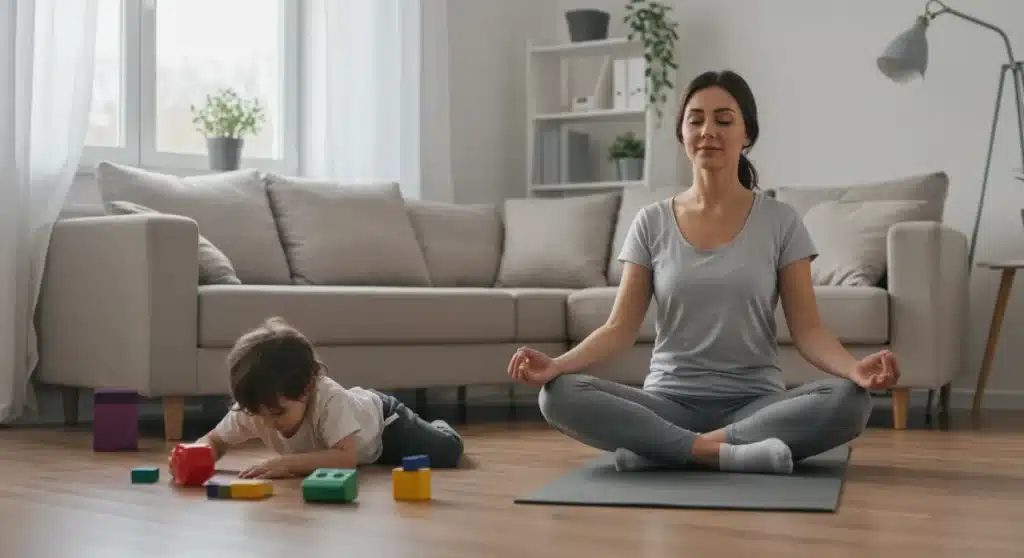
Mindfulness for parents involves intentionally bringing awareness to the present moment without judgment, enabling caregivers to respond to their children with greater patience, understanding, and emotional regulation, thereby enhancing family harmony and personal well-being.
In the whirlwind of modern family life, where schedules are packed and distractions abound, the concept of mindfulness for parents has emerged as a vital tool. It’s about more than just being calm; it’s about cultivating a deep, intentional presence that transforms daily interactions with your children.
Understanding mindfulness for modern parenting
Modern parenting, particularly in 2026, presents a unique set of challenges. The constant demands of work, technology, and societal pressures can often leave parents feeling overwhelmed and disconnected. Mindfulness offers a powerful antidote, providing a pathway to reclaim your attention and respond to your children with clarity rather than reactivity.
At its core, mindfulness is the practice of paying attention to the present moment, on purpose and without judgment. For parents, this translates into being fully engaged during playtime, truly listening during conversations, and even finding moments of peace amidst chaos. It’s about stepping away from autopilot and consciously choosing how you show up for your family.
The science behind mindful parenting
Research consistently highlights the benefits of mindfulness, not just for individual well-being but also for family dynamics. Studies show that mindful parents experience lower stress levels, improved emotional regulation, and enhanced empathy. These qualities directly contribute to a more positive and supportive home environment.
- Reduced parental stress and burnout.
- Improved emotional regulation in both parents and children.
- Enhanced parent-child communication and connection.
- Greater sense of calm and presence in daily life.
Embracing mindfulness doesn’t require hours of meditation; it’s about integrating small, intentional practices into your daily routine. It’s a skill that can be developed over time, leading to profound shifts in how you interact with your children and manage the inherent stresses of parenting.
Cultivating present moment awareness
One of the foundational aspects of mindfulness for parents is developing present moment awareness. This means consciously bringing your attention to what is happening right now, rather than dwelling on the past or worrying about the future. For parents, this often involves redirecting focus from the never-ending to-do list to the immediate interaction with a child.
In a world filled with digital distractions, cultivating this awareness can be particularly challenging. Yet, it is precisely this challenge that makes the practice so rewarding. When you are truly present, you notice more, you connect more deeply, and you respond more thoughtfully.
Simple techniques for daily presence

Incorporating present moment awareness into your parenting routine doesn’t have to be complicated. Start with small, manageable practices that you can weave into your day. These moments, however brief, accumulate to create a significant impact on your overall presence.
- Mindful listening: When your child speaks, put aside your phone or other tasks and truly listen to them without formulating your response.
- Sensory awareness: During an activity with your child, like playing outside, focus on the sights, sounds, and smells around you both.
- Mindful transitions: Take a few deep breaths before picking up your child from school or entering the house after work, to mentally shift gears.
These techniques help anchor you in the present, allowing you to fully experience the joys and challenges of parenting as they unfold. The more you practice, the more natural and automatic this presence becomes, enriching your interactions and strengthening your bond with your children.
Developing patience through mindful responses
Patience is often considered a virtue, and for parents, it feels like an essential superpower. However, in moments of frustration or stress, patience can quickly wear thin. This is where mindfulness for parents offers a transformative approach: by cultivating mindful responses rather than reactive ones.
A reactive response is often driven by automatic impulses, stress, or past conditioning. A mindful response, on the other hand, involves a pause, an observation of your internal state, and a deliberate choice of how to act. This pause creates space for empathy and understanding, even when faced with challenging behaviors from your children.
Strategies for increasing parental patience
Building patience is an ongoing process that requires self-compassion and consistent effort. Integrating specific mindfulness strategies can significantly enhance your ability to remain calm and patient, even in the most trying situations.
- The “STOP” practice: Stop what you’re doing, Take a breath, Observe your thoughts and feelings, Proceed with awareness.
- Emotional check-ins: Regularly ask yourself, “How am I feeling right now?” and acknowledge any emotions without judgment.
- Perspective taking: When feeling frustrated, try to see the situation from your child’s point of view, considering their developmental stage and needs.
These practices help interrupt the cycle of reactivity, allowing you to choose a more constructive and patient response. Over time, this shift not only benefits your children but also contributes to your own emotional well-being and a more peaceful home environment.
Mindfulness in daily routines and interactions
Integrating mindfulness for parents into daily routines can transform mundane tasks into opportunities for connection and presence. From meal times to bedtime, each interaction holds the potential for mindful engagement, turning everyday moments into cherished memories and learning experiences.
The key is not to add more to your already busy schedule, but to approach existing activities with a different quality of attention. This shift in perspective can reduce stress, increase enjoyment, and deepen the bond you share with your children, making the most of every precious moment.
Mindful eating and play
Meal times can often be a source of stress, but they can also be transformed into mindful experiences. Encourage your children to notice the colors, textures, and tastes of their food. Similarly, mindful play involves fully engaging with your child’s world, allowing them to lead and exploring with curiosity.
- Mindful meals: Sit together, turn off screens, and discuss the food, how it tastes, and where it comes from.
- Engaged playtime: Get down to your child’s level, participate without directing too much, and observe their creativity.
- Mindful walks: Point out interesting things in nature, listen to birds, and feel the breeze, making it a shared sensory experience.
By engaging mindfully in these routine activities, you teach your children the value of presence and attention, while also creating a calmer, more connected atmosphere within your family. These shared mindful moments become anchors of stability and joy in a busy world.
Dealing with parental stress and overwhelm
Parenting, while incredibly rewarding, is undeniably stressful. The constant demands, emotional labor, and lack of personal time can lead to feelings of overwhelm and burnout. This is why incorporating mindfulness for parents is not just about benefiting your children, but also about safeguarding your own mental and emotional health.
Mindfulness provides tools to recognize and respond to stress before it escalates, offering strategies for self-regulation and resilience. It helps you create a buffer against the daily pressures, allowing you to maintain a sense of balance and calm.
Mindful self-care practices
Self-care for parents is not a luxury; it’s a necessity. Mindful self-care involves intentionally setting aside time and space to recharge, recognizing that you cannot pour from an empty cup. These practices help replenish your energy reserves and enhance your capacity for patience and presence.
- Mindful breathing: Take short, intentional breath breaks throughout the day to calm your nervous system.
- Body scan meditation: Spend a few minutes noticing sensations in your body to release tension.
- Mindful movement: Engage in gentle exercise like stretching or walking, paying attention to your body’s sensations.
- Short breaks: Step away for five minutes when feeling overwhelmed, even if it’s just to sit quietly with a cup of tea.
Prioritizing these mindful self-care practices allows you to show up as a more rested, patient, and emotionally available parent. It’s an investment in your well-being that pays dividends for your entire family, creating a more resilient and harmonious home.
Teaching mindfulness to children
As parents embrace mindfulness for parents, a natural extension is to introduce these principles to their children. Teaching children mindfulness from a young age can equip them with invaluable tools for emotional regulation, focus, and self-awareness, preparing them for the challenges of a rapidly changing world.
Children are naturally curious and often receptive to simple mindfulness exercises. The key is to make it playful, engaging, and age-appropriate, integrating it into their daily lives in a way that feels natural and fun rather than prescriptive.
Age-appropriate mindfulness activities
Introducing mindfulness to children can be done through various activities that encourage awareness and calm. These don’t need to be formal meditations but can be woven into play and routine.
- “Belly breathing”: Have children lie down and place a small toy on their belly, watching it rise and fall with their breath.
- “Mindful eating” game: Encourage them to describe the taste, texture, and smell of a single piece of fruit or chocolate.
- “Sound safari”: Sit quietly and listen for all the different sounds they can hear, both near and far.
- “Glitter jar” for emotions: Shake a jar with glitter and water, explaining that the glitter represents thoughts and feelings, which eventually settle.
By modeling mindful behavior and offering these simple practices, parents can help their children develop a strong foundation for emotional intelligence and resilience. This shared journey of mindfulness strengthens family bonds and creates a more peaceful, understanding household for everyone.

The long-term impact of mindful parenting in 2026
The practice of mindfulness for parents is not a quick fix but a transformative journey with profound long-term impacts, particularly as we look towards 2026 and beyond. In an increasingly complex and fast-paced world, equipping families with the tools for presence and emotional regulation becomes more critical than ever.
Mindful parenting fosters not only immediate improvements in family dynamics but also instills life-long skills in children, preparing them to navigate challenges with greater resilience and compassion. It’s an investment in a future where emotional well-being is prioritized and authentic connection thrives.
Building a resilient family culture
When parents consistently practice mindfulness, it creates a ripple effect throughout the family. Children learn by example, absorbing the calm, patience, and self-awareness demonstrated by their caregivers. This leads to a family culture rooted in understanding, respect, and emotional intelligence.
- Children develop better emotional regulation skills.
- Family communication becomes more open and effective.
- Conflicts are approached with greater calm and problem-solving.
- A stronger sense of security and belonging is fostered in the home.
The commitment to mindful parenting in 2026 means creating a legacy of emotional health and strong relationships. It’s about raising children who are not only present and patient but also empathetic and resilient, ready to thrive in their own lives and contribute positively to the world around them.
| Key Aspect | Brief Description |
|---|---|
| Present Moment Awareness | Consciously focusing on the current experience without judgment, enhancing connection with children. |
| Mindful Responses | Pausing before reacting to foster patience and thoughtful interactions with children. |
| Self-Care Integration | Prioritizing personal well-being through mindful practices to prevent parental burnout. |
| Teaching Children | Introducing age-appropriate mindfulness activities to help children develop emotional regulation. |
Frequently asked questions about mindful parenting
The core benefit of mindfulness for parents is the ability to respond to situations with greater intention and less reactivity. This leads to increased patience, reduced stress, and deeper, more meaningful connections with their children, fostering a calmer family environment.
Busy parents can integrate mindfulness through short, intentional practices like mindful breathing during transitions, fully listening to their child for a few minutes, or engaging all senses during a simple activity like eating. Consistency with brief moments is more impactful than infrequent long sessions.
No, mindful parenting does not mean suppressing anger or other emotions. It means acknowledging these feelings without judgment and choosing how to respond constructively, rather than reacting impulsively. It’s about emotional awareness and thoughtful action, not emotional absence.
Simple mindfulness activities for children include “belly breathing” with a toy on their stomach, a “sound safari” to listen for different noises, or a “mindful eating” game where they describe the senses involved with a piece of food.
Mindful parenting fosters long-term improvements in family relationships by building a foundation of empathy, effective communication, and emotional resilience. Children learn self-regulation and develop stronger bonds with parents, leading to a more harmonious and supportive family environment over time.
Conclusion
Embracing mindfulness for parents in 2026 is more than just a trend; it’s a fundamental shift towards more conscious, patient, and fulfilling parenting. By cultivating present moment awareness, developing mindful responses, and integrating self-care, parents can navigate the complexities of family life with greater ease and joy. This journey not only transforms individual well-being but also creates a lasting legacy of emotional intelligence and strong, loving connections within the family. The power to stay present and patient lies within, ready to be harnessed for a more harmonious future.